Mexico, Central & South America
Galápagos cruises
Galápagos cruises are small-ship expeditions of 4 to 7 nights among the volcanic islands about 600 miles off Ecuador, with naturalist-guided landings, snorkeling and wildlife so unafraid that you walk past it at close range. Ships carry 100 guests or fewer under national park rules, and you fly in from Quito or Guayaquil. They sail year-round: December to May brings warmer water and calmer seas, June to November cooler water, more marine life and rougher crossings.
- Season: Year-round; warm, calm season December to May, cool garúa season June to November.
- Typical length: 4 to 7 nights aboard; 9 to 11 days including mainland Ecuador
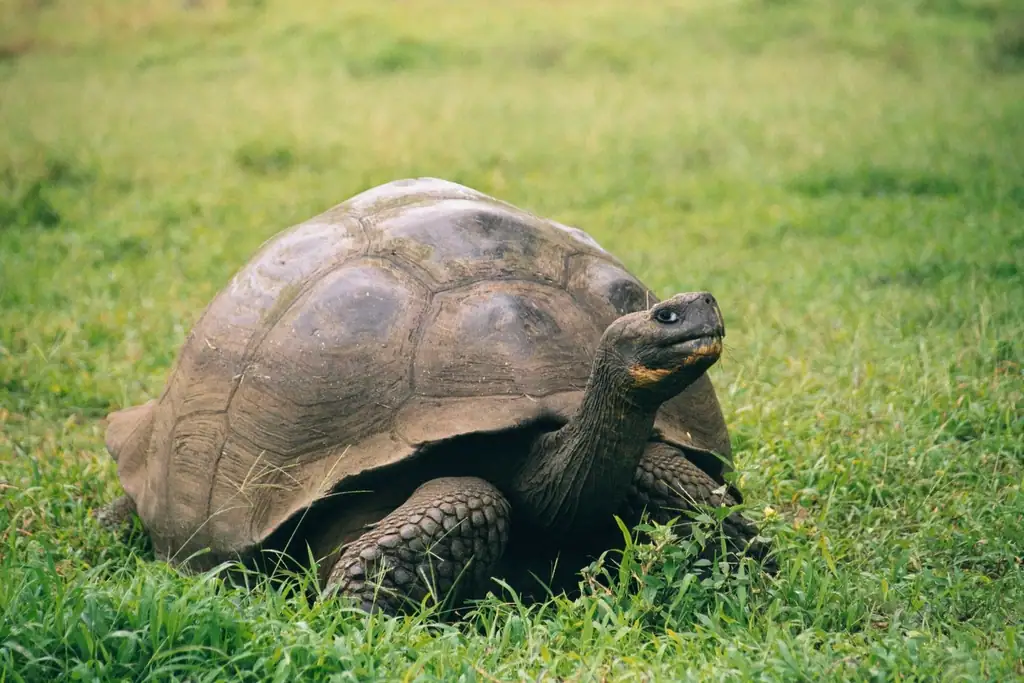
Photo: The original uploader was Pandanus at German Wikipedia ., Public domain, via Wikimedia Commons
- Season
- Year-round; warm, calm season December to May, cool garúa season June to November.
- Typical length
- 4 to 7 nights aboard; 9 to 11 days including mainland Ecuador
- Best months
- Jan, Feb, Apr, May, Nov, Dec
- Main departure ports
- Varies
- Ports covered here
- 0
- Cruise lines
- 3 lines sail here
What a Galápagos Islands cruise is like
No cruise is quite like the Galápagos. Sea lions nap on the landing steps, blue-footed boobies dance a few feet from the trail, marine iguanas pile up on black lava, and giant tortoises graze in the misty highlands of Santa Cruz. Because the animals evolved without land predators, they show little fear of people, which is exactly what inspired Charles Darwin when HMS Beagle visited in 1835.
Cruising is the best way to see the islands, since the most remote visitor sites, such as Genovesa, Fernandina and Española, are reachable only by boat. Galápagos National Park sets each ship’s itinerary, caps group sizes and requires a certified naturalist guide on every landing. Most days include two outings, a ‘wet’ landing from a Zodiac onto a beach or a ‘dry’ step onto rocks, plus snorkeling, kayaking or a glass-bottom boat ride.
Expect a comfortable but active trip. Ships range from yachts of 16 guests to expedition vessels of 100, and overnight crossings in open ocean can be rough. Most travelers spend a night or two in Quito or Guayaquil first and book a package including flights to Baltra or San Cristóbal. The Galápagos suit curious travelers of all ages, but anyone with mobility limits should ask about landings on uneven lava rock.
Best time to cruise Galápagos Islands
- Jan: Best time to go
- Feb: Best time to go
- Mar: Good time to go
- Apr: Best time to go
- May: Best time to go
- Jun: Good time to go
- Jul: Good time to go
- Aug: Good time to go
- Sep: Good time to go
- Oct: Good time to go
- Nov: Best time to go
- Dec: Best time to go
- No regular sailings
- Shoulder season
- Good time to go
- Best time to go
JanuaryBest time to go
The warm season begins, with sea temperatures in the mid-70s °F, short tropical showers and green landscapes. Green sea turtles nest on the beaches, land iguanas start breeding on Isabela, and marine iguanas on Española turn brick-red and green for mating. Holiday demand lingers in early January.
FebruaryBest time to go
February is one of the warmest months, with water close to 80 °F and calm seas ideal for snorkeling. Flamingos nest on Floreana, and green sea turtle eggs begin hatching. Afternoon showers are brief, and the islands are lush and green.
MarchGood time to go
March is often the hottest and rainiest month, with humid days around 85 °F and short but heavy showers. Seas are generally calm, and snorkeling water is at its warmest. Waved albatrosses begin to return to Española late in the month, and frigatebirds are courting on North Seymour.
AprilBest time to go
April is one of the best months overall, combining warm water, calm seas and abundant wildlife. Waved albatrosses arrive on Española and begin their courtship, land iguana eggs hatch on Isabela, and sea turtle hatchlings emerge on sandy beaches.
MayBest time to go
May is a transition month, with warm water and less rain. Blue-footed boobies begin courtship on North Seymour and Española, and waved albatrosses lay eggs. Seas start to get a little livelier toward the end of the month, and demand is lower than in summer.
JuneGood time to go
The cool garúa season begins, as the Humboldt Current brings cooler, nutrient-rich water and misty skies. Water temperatures fall to the low 70s °F, and wetsuits become useful. Humpback whales may appear around Isabela, and giant tortoises start migrating to nesting areas.
JulyGood time to go
July brings cool, misty mornings, choppier seas and excellent marine life. Blue-footed boobies are nesting, flightless cormorants court on Fernandina, and penguins are active. Summer holidays push up demand, so book well ahead for July sailings.
AugustGood time to go
August is among the coolest and roughest months, with water in the upper 60s °F and swells on overnight crossings. Sea lion pups are born on many islands, Galápagos hawks court, and seabirds are busy. Family travel keeps demand high.
SeptemberGood time to go
September is typically the coolest month, with the strongest currents and seas. Sea lion pups are playful, penguins are active around Bartolomé, and seabirds are nesting. It’s one of the quieter months for demand, and some ships take their annual maintenance break.
OctoberGood time to go
Galápagos fur seals begin mating, blue-footed booby chicks grow, and lava herons nest. Water is still cool and garúa mist common in the highlands. Demand remains relatively low, so availability is better than in peak months.
NovemberBest time to go
Seas calm down and water starts warming. Young sea lions are curious and playful, making November one of the best months for snorkeling with them. Green sea turtles begin mating, and Thanksgiving week is the main busy period.
DecemberBest time to go
The warm season begins, with calmer seas and green vegetation after the first rains. Giant tortoise eggs start hatching, green turtles are mating, and the last waved albatross chicks leave Española. Christmas and New Year departures are the year’s most in-demand.
Galápagos Islands cruise highlights
- 1
Giant tortoises on Santa Cruz
In the green highlands of Santa Cruz, wild Galápagos giant tortoises wander pastures and muddy ponds. In Puerto Ayora, the Charles Darwin Research Station runs a breeding program that has helped bring several tortoise species back from the brink.
- 2
Blue-footed boobies on North Seymour and Española
North Seymour’s short trail passes nesting blue-footed boobies doing their high-stepping courtship dance, plus magnificent frigatebirds with inflated red throat pouches. Española’s Punta Suárez adds Nazca boobies and, from about April to December, waved albatrosses.
- 3
Genovesa, the bird island
This remote northern island, reached after an overnight crossing, hosts huge colonies of red-footed boobies, storm petrels and swallow-tailed gulls. Climb Prince Philip’s Steps for seabird views, and snorkel in Darwin Bay, a flooded crater.
- 4
Fernandina and western Isabela
The youngest, most volcanic islands host flightless cormorants, Galápagos penguins and dense colonies of marine iguanas at Punta Espinoza. The cool, nutrient-rich water here attracts sea turtles, rays and sometimes whales and dolphins.
- 5
Bartolomé’s Pinnacle Rock
A wooden boardwalk climbs to Bartolomé’s summit for the archipelago’s most famous view: lava fields, twin crescent beaches and Pinnacle Rock. Below, the snorkeling is excellent, with a chance of swimming beside Galápagos penguins.
- 6
Snorkeling with sea lions
Snorkeling sites such as Devil’s Crown off Floreana, Gardner Bay on Española and Kicker Rock near San Cristóbal let you swim with playful young sea lions, turtles, rays, reef sharks and parrotfish. Wetsuits make cool-season snorkeling comfortable.
Typical Galápagos Islands itineraries
- 1
7-night northern and central islands
Typically North Seymour, Genovesa, Bartolomé, Santiago, Santa Cruz and Rábida, with penguins, red-footed boobies and the Pinnacle Rock view.
- 2
7-night southern and western islands
Española, Floreana, Isabela and Fernandina, with waved albatross, flightless cormorants, marine iguanas and some of the best snorkeling.
- 3
4- or 5-night shorter loops
Half of a longer route, often combining Santa Cruz with either the north or the south. Good if time is tight, though you’ll miss the remote outer islands.
- 4
9- to 11-day packages with Quito or Guayaquil
Most travelers book a cruise with a night or two on the mainland, round-trip flights to the islands and transfers. Quito’s colonial old town, a UNESCO World Heritage Site, is a popular add-on.
Cruise lines that sail Galápagos Islands
Galápagos Islands cruise tips
- Book early, especially for July, August and the holidays. Ships are small, and the best cabins and itineraries sell out many months ahead.
- Fly in to Quito or Guayaquil at least a day before your Galápagos flight. Quito sits at about 9,350 feet, so take it easy on arrival or choose sea-level Guayaquil.
- Pack reef-safe sunscreen, a hat, sturdy sandals for wet landings, closed shoes for lava trails and a light rain jacket. Many ships provide or rent wetsuits.
- Keep about 6 feet (2 meters) from wildlife, never feed animals, and stay on marked trails. Your naturalist guide will enforce park rules.
- Bring cash for the park entrance fee and transit card paid on arrival, plus crew gratuities. Ecuador uses the US dollar.
Galápagos cruises: FAQs
When is the best time to visit the Galápagos?
Any time of year. December to May has warmer water, calmer seas and greener islands; June to November has cooler water, more marine life and rougher seas. April, May and November are especially good all-round months.
How long is a Galápagos cruise?
Most are 4, 5 or 7 nights aboard. With a night or two in Quito or Guayaquil and flights, a typical trip lasts 9 to 11 days. Seven nights covers the most varied wildlife.
Do I need a passport for the Galápagos?
Yes. US and Canadian citizens need a passport valid for at least six months. You’ll also buy a transit control card before flying to the islands and pay the national park entrance fee on arrival.
Are Galápagos cruises rough?
Sometimes. Overnight crossings between islands are in open ocean, and seas are roughest from August to October. Bring motion-sickness remedies and choose a lower, midship cabin if you’re prone to seasickness.
Which cruise line is best for the Galápagos?
Lindblad Expeditions, in partnership with National Geographic, has decades of experience and strong naturalist teams. Celebrity and Silversea offer polished 100-guest ships with more inclusive pricing. Smaller local yachts are an option for very small groups.
How close can you get to animals in the Galápagos?
Very close. Park rules ask you to stay about 6 feet (2 meters) away, and you’ll often pass nesting boobies, sea lions and iguanas at just that distance. Curious young sea lions sometimes swim right up to snorkelers, which is allowed as long as you don’t reach out to touch them.
Updated November 2026 by the BookMyDreamCruise editorial team. How we research and fact-check.
Sources: Wikidata.