Europe & the Mediterranean
Greek Isles cruises
A Greek Isles cruise hops between Aegean islands such as Mykonos, Santorini, Rhodes, Crete and Patmos, usually starting in Athens (Piraeus) and often adding Ephesus in Türkiye. Sailings run from April to early November, either 3 to 7 nights with Greek specialist Celestyal or 7 to 12 nights on international lines. Late May, June and September bring warm seas without the heat, crowds and strong summer winds of July and August.
- Season: April to early November; best late May–June and September
- Typical length: 3 to 7 nights from Piraeus; 7 to 12 nights on wider Eastern Med routes
- Season
- April to early November; best late May–June and September
- Typical length
- 3 to 7 nights from Piraeus; 7 to 12 nights on wider Eastern Med routes
- Best months
- May, Jun, Sep
- Main departure ports
- Athens, Istanbul
- Ports covered here
- 11
- Cruise lines
- 20 lines sail here
What a Greek Isles cruise is like
The Greek Isles are the beach-and-ruins corner of the Mediterranean. Port days are lighter on logistics than in Italy: you step ashore in a harbor town, climb to a whitewashed hilltop village or an ancient acropolis, swim, eat grilled octopus by the water and sail at sunset. The islands sit close together, so ships call almost daily with few sea days.
Two styles dominate. Celestyal, a Greek line, runs 3-, 4- and 7-night loops from Piraeus built around the Cyclades, the Dodecanese, Crete and Kuşadası, ideal for adding a cruise to a land trip in Greece. International big ships fold Mykonos and Santorini into longer Eastern Med itineraries from Piraeus, Venice-area ports, Civitavecchia or Istanbul. Small ships and sailing yachts reach islands the big ships can’t, such as Hydra, Milos or Folegandros.
The islands vary more than the postcards suggest. Santorini is a tender port with a cliff to climb, Mykonos is breezy and compact, Rhodes and Corfu have large medieval old towns, and Crete is big enough that one port day barely scratches the surface. Travelers with limited mobility should check which stops are tender landings and how steep the walk is from the pier.
Summer has a quirk worth knowing: the meltemi, a strong, dry north wind that blows across the Aegean in July and August. It cools the islands, but it can make crossings rolly and occasionally cancels tender landings at Santorini or Mykonos. Shoulder months avoid both the wind and the worst crowds.
Best time to cruise Greek Isles
- Jan: No regular sailings
- Feb: No regular sailings
- Mar: Shoulder season
- Apr: Good time to go
- May: Best time to go
- Jun: Best time to go
- Jul: Good time to go
- Aug: Good time to go
- Sep: Best time to go
- Oct: Good time to go
- Nov: Shoulder season
- Dec: No regular sailings
- No regular sailings
- Shoulder season
- Good time to go
- Best time to go
Greek Isles in JanuaryNo regular sailings
There’s no regular island cruising in January, and most hotels and tavernas on Santorini and Mykonos are closed. Greeks talk of the halcyon days, a spell of calm, sunny weather that often arrives mid-month, but storms and ferry cancellations are just as likely. Athens is a good winter city break, with uncrowded museums and highs in the mid-50s °F (12–14°C).
Greek Isles in FebruaryNo regular sailings
Island cruising is still on pause. On land, Apokries, the Greek carnival season before Orthodox Lent, brings costume parades, with Patras hosting the biggest, and Clean Monday sees families flying kites. Almond trees bloom on Crete and in the Peloponnese. Seas are cold and often rough, so save the cruise for later in the year.
Greek Isles in MarchShoulder season
The first Aegean departures typically resume in late March or April, depending on the line. March 25 brings Independence Day parades in Athens and island towns. Hillsides turn green, wildflowers appear and highs reach the low 60s °F (16–17°C), but swimming is out and some island businesses haven’t yet reopened after winter.
Greek Isles in AprilGood time to go
Orthodox Easter, the biggest holiday of the Greek year, often lands in April: candlelit midnight services, fireworks at the stroke of Easter Sunday and lambs roasting on spits the next day. If your cruise overlaps, some sites close and ferries fill. Archaeological sites are carpeted with wildflowers, and highs reach the upper 60s °F (19–21°C).
Greek Isles in MayBest time to go
The islands are green and fragrant, poppies dot the archaeological sites and highs reach the mid-70s °F (23–25°C). The sea warms to the upper 60s °F (about 20°C) by month’s end, bracing but swimmable for the brave. Beach bars and tavernas are fully open, and Santorini and Mykonos are lively without the summer crush.
Greek Isles in JuneBest time to go
Perhaps the best month for the islands. The sea reaches the low 70s °F (22–23°C), days are at their longest, with sunsets after 8:30 p.m., and the meltemi hasn’t yet hit full strength. Crowds on Santorini and Mykonos grow in the second half of the month as Europe’s school holidays approach.
Greek Isles in JulyGood time to go
Hot and busy. Athens often tops 90°F (32°C), and heat waves have pushed past 104°F (40°C) and closed the Acropolis in the early afternoon. The meltemi starts blowing hard, cooling the islands but making tender landings at Santorini less reliable. Expect the highest fares and several ships in the busiest ports each day.
Greek Isles in AugustGood time to go
The Dormition of the Virgin on August 15 is Greece’s great summer holiday, when Greeks flood the islands and pilgrims crowd Tinos. Ferries, beaches and tavernas are packed and fares peak. The sea is at its warmest, around 77°F (25°C), and the meltemi is at its strongest, so pack seasickness remedies if you’re prone.
Greek Isles in SeptemberBest time to go
Warm water, golden light and thinning crowds once Greek schools reopen in the second week. Highs drop into the low 80s °F (27–28°C), the meltemi eases, and the evenings are perfect for an outdoor dinner in Rhodes or Chania. Demand is high and cabins on the best itineraries go early.
Greek Isles in OctoberGood time to go
Warm days linger into the mid-70s °F (23–24°C) and the sea is still swimmable early in the month. The first autumn rains arrive later on, and some island hotels and shops start closing toward month’s end. October 28, Ochi Day, brings parades and flags. Fares and crowds drop noticeably.
Greek Isles in NovemberShoulder season
The season ends in early November. Late sailings find Santorini and Mykonos half-shuttered but peaceful, with highs in the mid-60s °F (17–19°C) and a real chance of rain. Athens remains a pleasant city to explore, and olive-harvest season is underway across Crete and the Peloponnese.
Greek Isles in DecemberNo regular sailings
No regular island cruises sail in December. Athens lights a huge Christmas tree in Syntagma Square, and many towns display illuminated boats, a Greek holiday tradition older than the tree. If Greece in winter appeals, plan a land trip and leave the island-hopping for spring.
Average weather across Greek Isles ports
| Month | Jan | Feb | Mar | Apr | May | Jun | Jul | Aug | Sep | Oct | Nov | Dec |
|---|---|---|---|---|---|---|---|---|---|---|---|---|
| High °F (°C) | 5814 | 5915 | 6216 | 6720 | 7423 | 8228 | 8731 | 8831 | 8328 | 7624 | 6820 | 6216 |
| Low °F (°C) | 5111 | 5211 | 5312 | 5814 | 6418 | 7222 | 7625 | 7725 | 7323 | 6719 | 6116 | 5513 |
| Rain in (mm) | 4.4112 | 2.564 | 2.564 | 1.026 | 0.923 | 0.821 | 0.39 | 0.411 | 1.436 | 1.948 | 3.486 | 3.897 |
| Daylight (hrs) | 10 | 11 | 12 | 13 | 14 | 15 | 15 | 14 | 12 | 11 | 10 | 10 |
Greek Isles cruise highlights
- 1
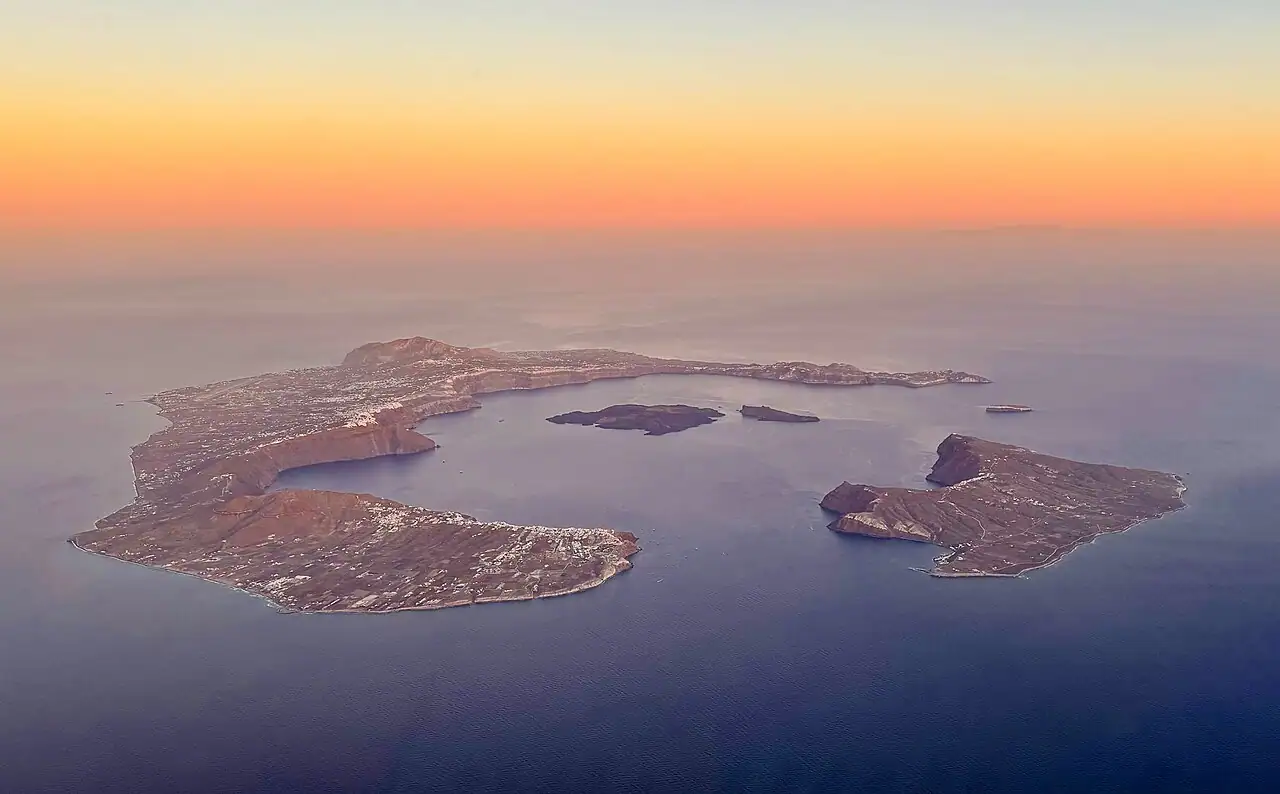
Sunset over Santorini’s caldera
Most ships leave before dark, but even a daytime call delivers the view: white villages strung along a crater rim above your anchored ship. Plan around the cable car queue at Fira, and consider a wine tasting of crisp Assyrtiko from vines trained low against the wind.
- 2
Mykonos and the island of Delos
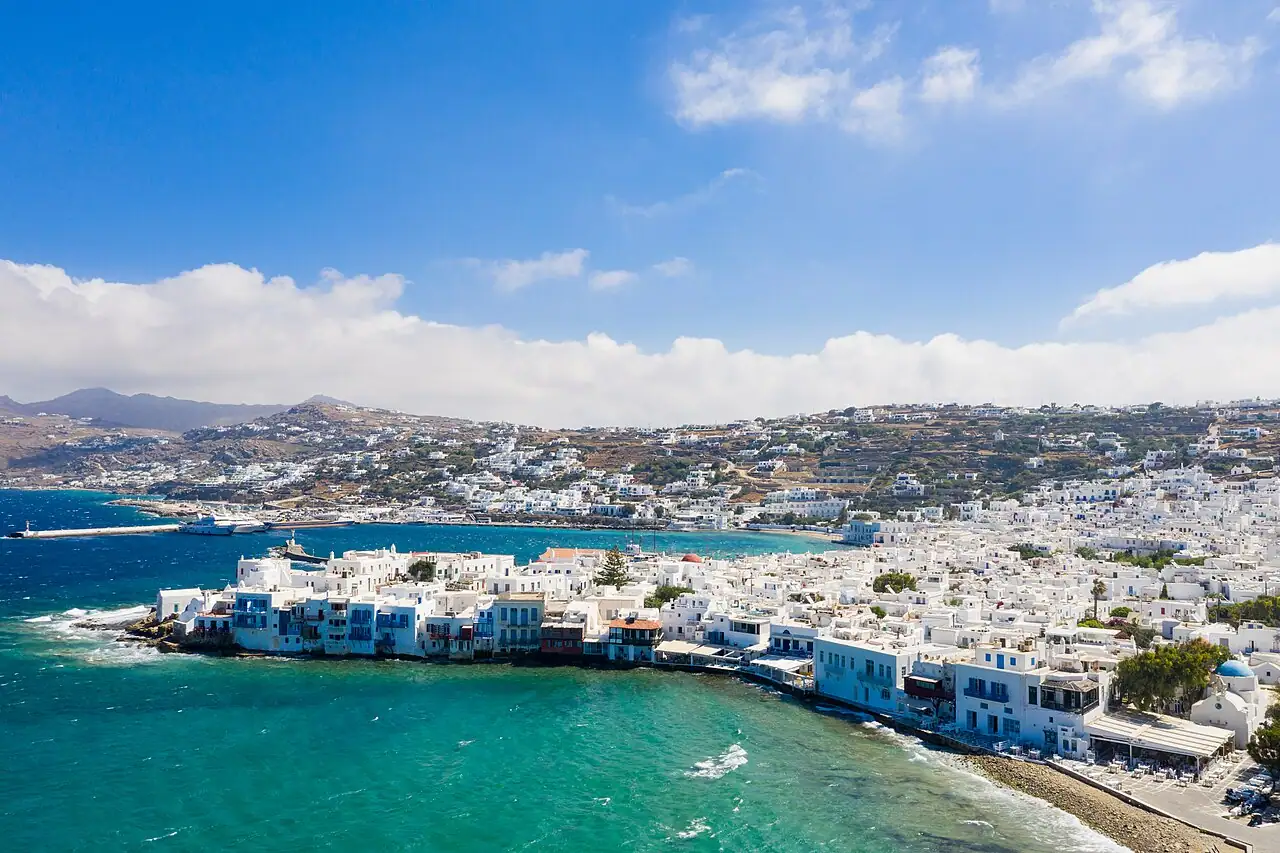
Ships dock at the new port north of town, linked by sea bus and shuttle. Wander the lanes to the Little Venice waterfront and the Kato Mili windmills, or take the half-hour boat to Delos, the uninhabited sacred island of Apollo and one of Greece’s great archaeological sites.
- 3
The Acropolis and the Acropolis Museum
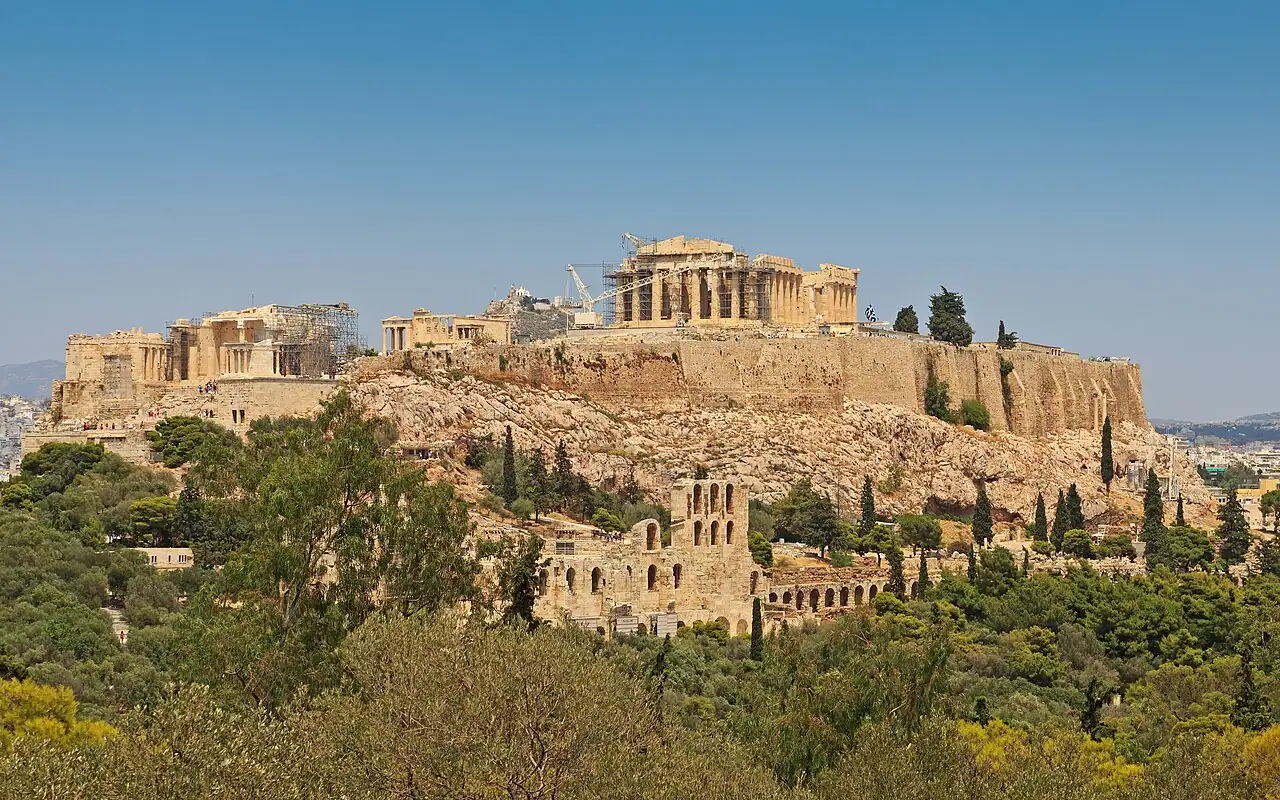
From Piraeus, central Athens is roughly 30 to 45 minutes by metro or taxi. Timed tickets for the Parthenon’s hilltop are essential in summer, and the glass-floored Acropolis Museum at its foot is one of the best archaeology museums in Europe. Many cruisers add a night in Athens before sailing.
- 4
Rhodes’ Old Town and Lindos
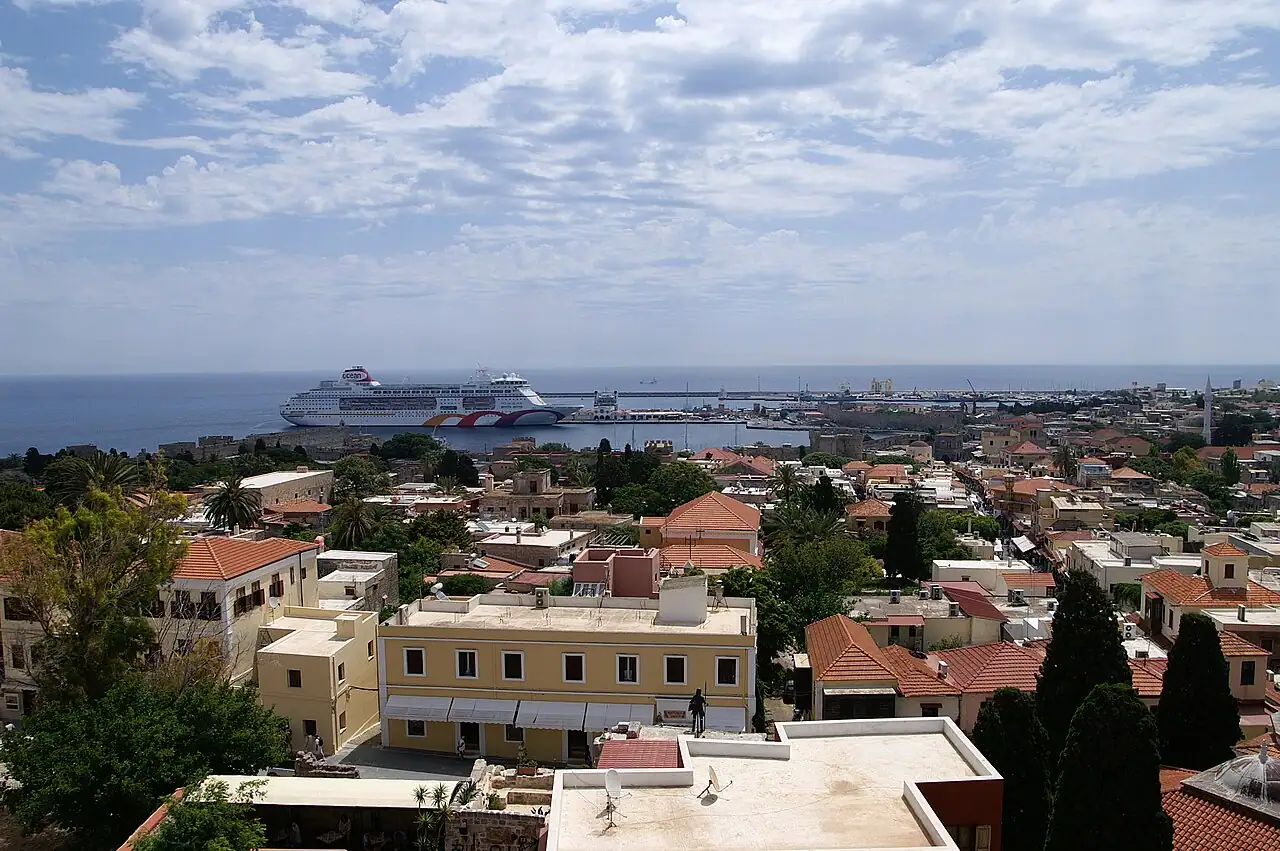
The cruise pier sits just outside the walls of a medieval city built by the Knights of St. John, with the cobbled Street of the Knights and the Palace of the Grand Master inside. About an hour away, the white village of Lindos sits below a clifftop acropolis overlooking turquoise bays.
- 5
Knossos and Chania on Crete
From Heraklion, the Minoan palace of Knossos is about 20 minutes away, and the city’s archaeological museum holds the frescoes and treasures found there. Ships calling at Souda Bay are a short drive from Chania, with its Venetian harbor, lighthouse and lanes of tavernas.
- 6
Patmos and the Cave of the Apocalypse
A small tender port where, by tradition, St. John received the visions of the Book of Revelation. The cave shrine and the fortified Monastery of St. John above it are UNESCO-listed and visited by pilgrims. Dress modestly and expect steep lanes.
- 7
Nafplio, Mycenae and Epidaurus
The elegant Peloponnese town of Nafplio, Greece’s first capital, is a tender stop with Venetian fortresses above the harbor. Half-day tours reach the Lion Gate of Mycenae and the ancient theater of Epidaurus, famous for acoustics that carry a whisper to the top row.
- 8
Beach days on Mykonos, Corfu and Kefalonia
Mykonos’ Ornos and Platis Gialos beaches are a short bus or taxi ride from town, Corfu’s Paleokastritsa coves are about 40 minutes from the port, and Myrtos Beach on Kefalonia, a long sweep of white pebbles below cliffs, is reachable from Argostoli.
Typical Greek Isles itineraries
- 1
3- or 4-night Aegean sampler from Piraeus
Celestyal’s short loops typically visit Mykonos, Kuşadası for Ephesus, Patmos, Heraklion and Santorini. A quick way to see several islands without the ferry juggling.
- 2
7-night Greek Isles and Türkiye from Piraeus
Round trips on Celestyal and international lines combining Mykonos, Santorini, Rhodes, Crete and Kuşadası, sometimes with Nafplio, Katakolon or Bodrum.
- 3
7- to 12-night Eastern Med with Greek islands
Sailings from Venice-area ports, Civitavecchia or Istanbul that include two or three islands alongside Dubrovnik, Kotor, Corfu or Istanbul. Good if you want a taste of the islands within a broader route.
- 4
Small-ship Cyclades and Peloponnese
Week-long Athens round trips on Windstar, Star Clippers, Ponant, Seabourn and similar lines that can call at smaller islands such as Hydra, Milos, Paros or Folegandros and the medieval rock town of Monemvasia.
Greek Isles ports of call
Athens
Departure port
Santorini
Santorini is a tender port: ships anchor inside the flooded volcanic caldera and small boats carry you to the Old Port at the foot of the cliffs below Fira. The draw is the view itself, whitewashed villages strung along the crater rim, plus Oia’s blue domes, Bronze Age Akrotiri and wineries growing grapes in volcanic ash. Your day revolves around the cable car, so plan for its queues.
Mykonos
Mykonos is a compact Cycladic island where most ships dock at the New Port, about 1.5 miles (2.5 km) north of Mykonos Town, with a sea bus and shuttle running into the center. The appeal is the town itself, a maze of whitewashed lanes, windmills and waterfront bars in Little Venice, plus beaches and a short boat ride to ancient Delos.
Rhodes
Rhodes is one of the easiest ports in Greece: ships dock right beside the walls of the medieval Old Town, a UNESCO-listed fortress city built by the Knights of St. John that you can walk into within minutes. Spend the day on its cobbled lanes and in the Palace of the Grand Master, or head south to the clifftop acropolis and white village of Lindos.
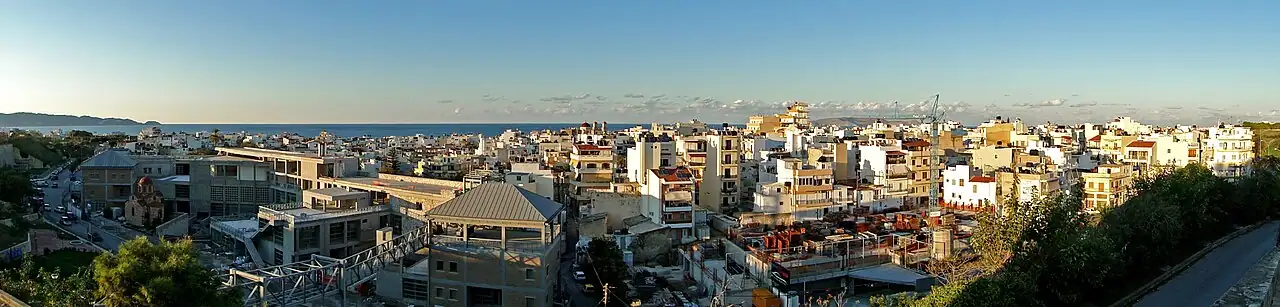
Heraklion, Crete
Heraklion is Crete’s capital and the gateway to Knossos, the great Bronze Age palace of the Minoans about 3 miles (5 km) south of town. Ships dock beside the Venetian harbor, within walking distance of the center, so you can pair Knossos with the Heraklion Archaeological Museum, one of the finest ancient collections in Europe, in a single well-planned day.
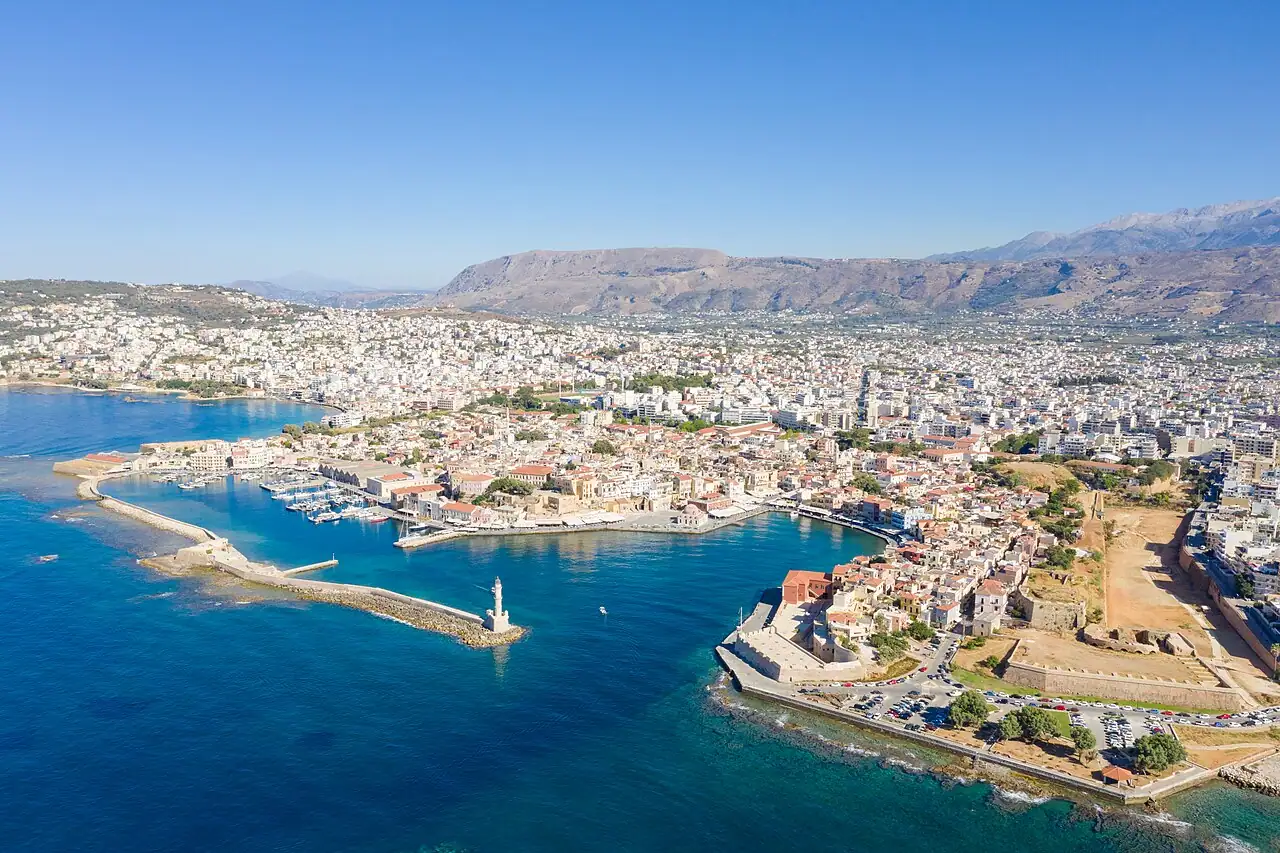
Chania (Souda Bay), Crete
Cruise ships calling at Chania dock at Souda Bay, a deep natural harbor about 4 miles (7 km) east of the city, with buses and taxis covering the 15- to 20-minute ride. The reward is Chania’s Venetian harbor and old town, arguably the most beautiful in Crete, with a lighthouse, a domed Ottoman mosque and lanes of pastel townhouses.
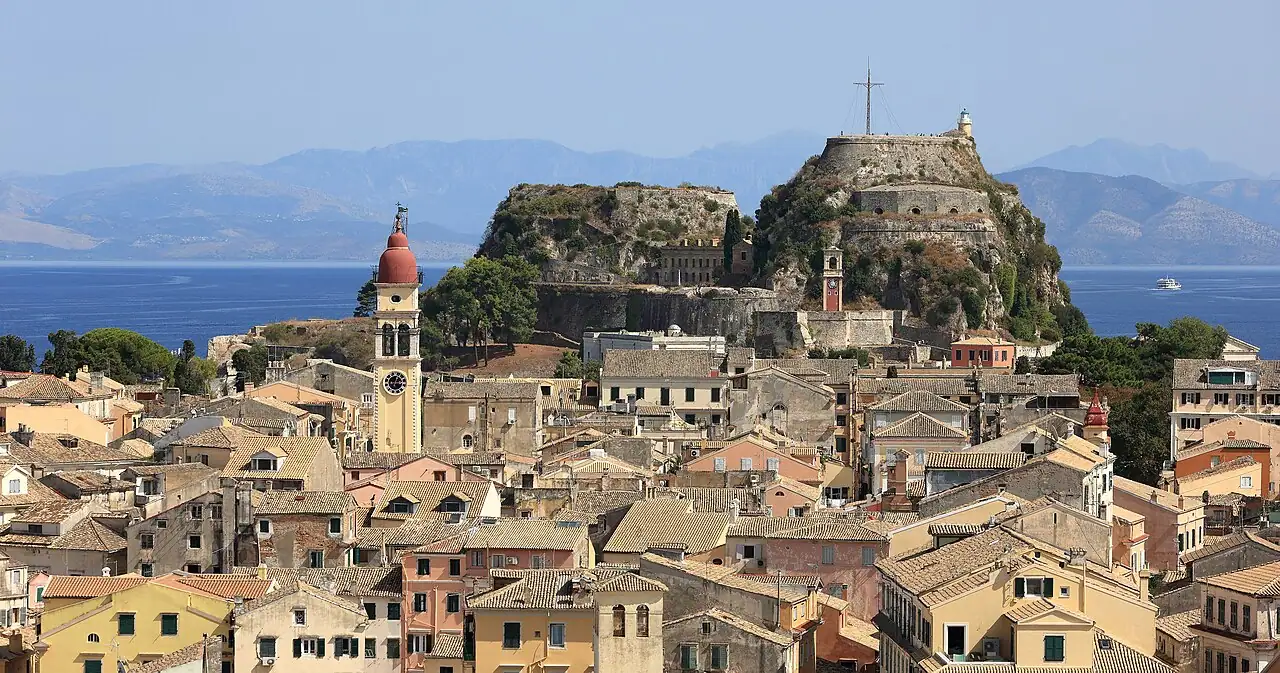
Corfu
Corfu is a green, Venetian-flavored Ionian island where ships dock at the New Port, roughly 1.5 miles (2.5 km) from the UNESCO-listed Old Town. Most visitors explore the Old Town’s arcaded squares and twin fortresses on foot, then add the Achilleion Palace, the view of Mouse Island or the coves of Paleokastritsa.
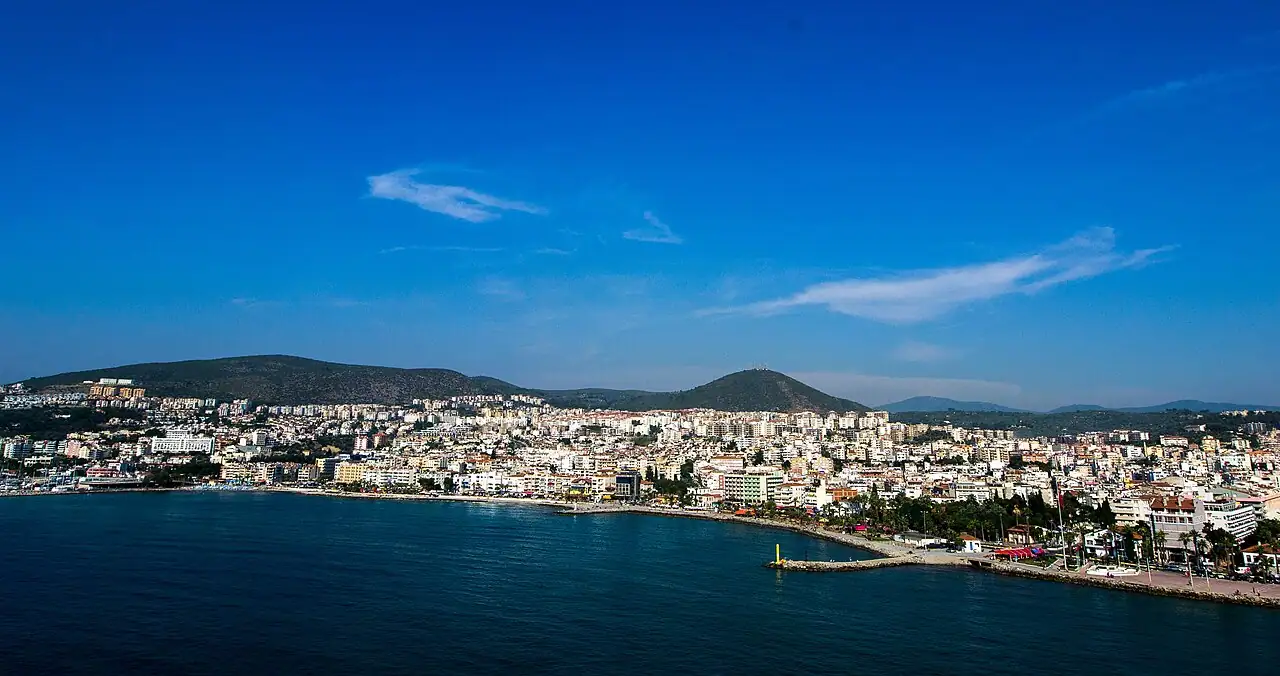
Kuşadası (for Ephesus)
Patmos
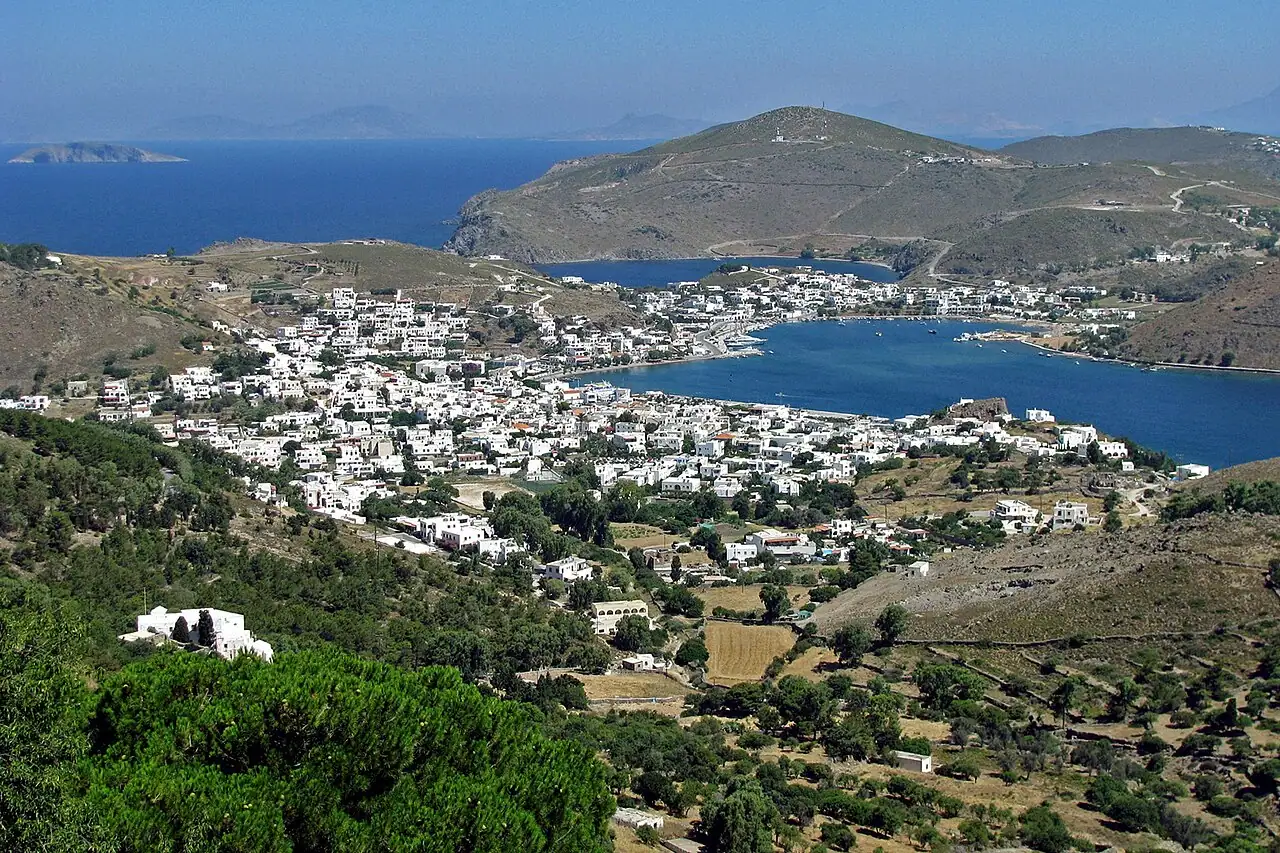
Patmos is a small, peaceful island in the Dodecanese, revered as the place where Saint John wrote the Book of Revelation. Ships usually anchor off the harbor village of Skala and tender passengers ashore. The highlights are the fortified Monastery of Saint John and the Cave of the Apocalypse, both UNESCO-listed, on the hillside above, plus a lovely whitewashed hilltop village.
Nafplio
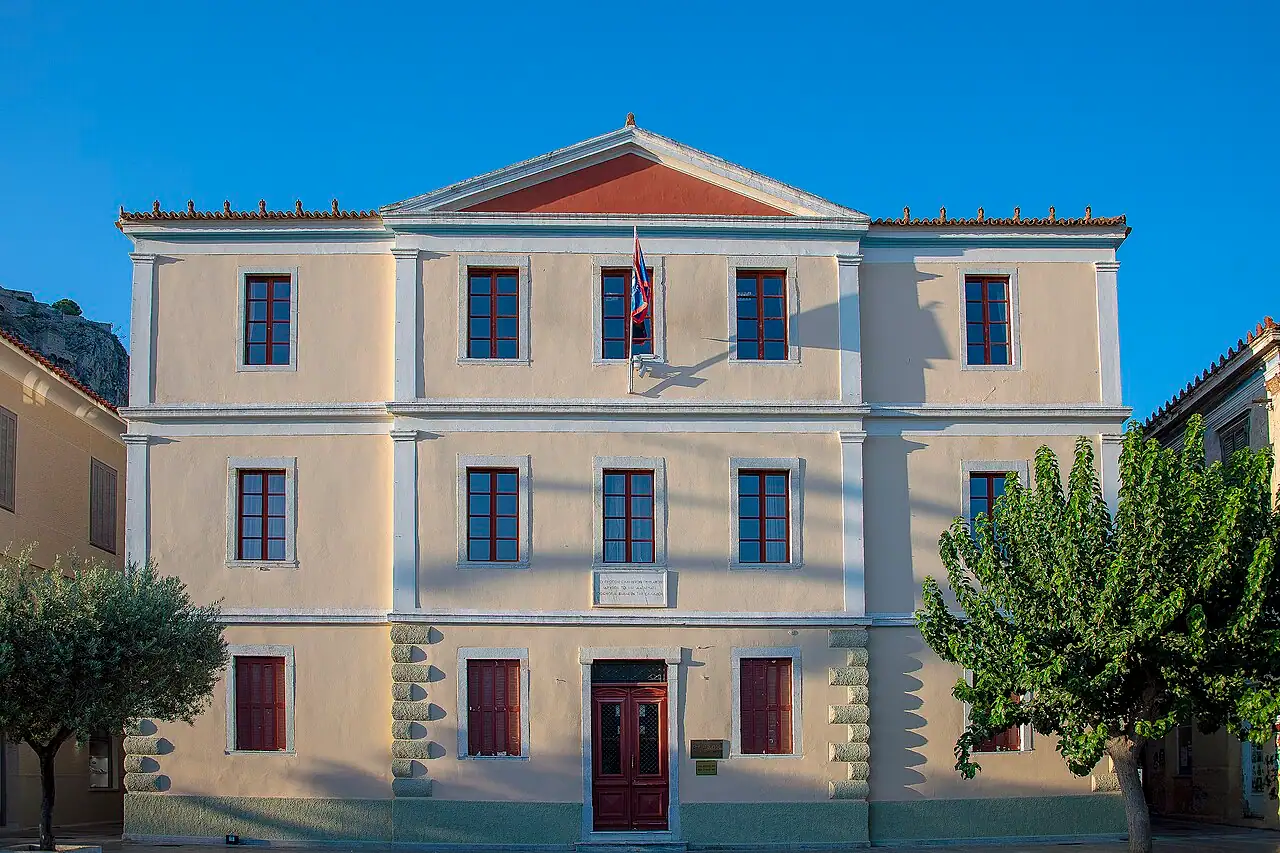
Nafplio is a graceful Venetian-era harbor town in the Peloponnese and modern Greece’s first capital, usually reached by tender from ships anchored in the bay. It’s a joy to explore on foot, with a fortress-topped hill, a castle on an islet and neoclassical squares, and it’s the best base for day trips to Mycenae and the ancient theater of Epidaurus.
Katakolon (for Olympia)
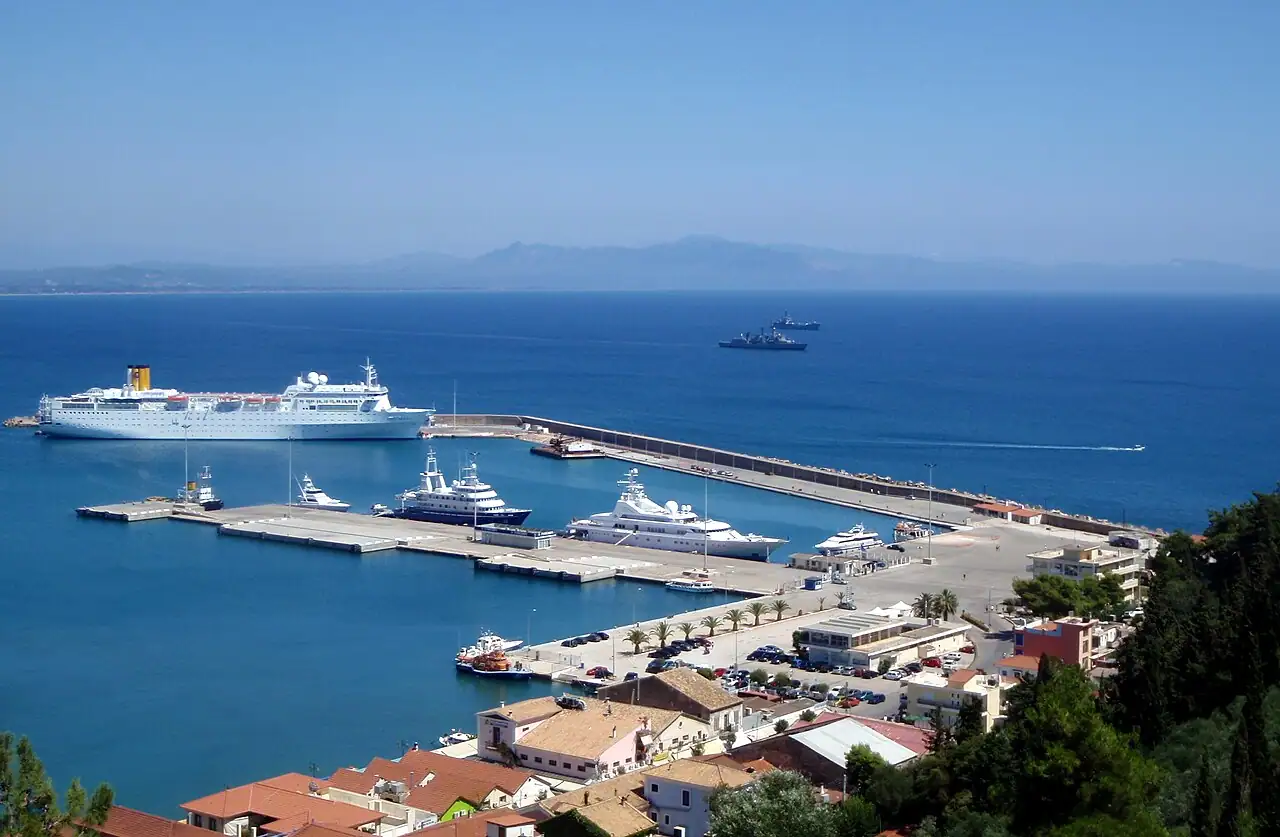
Katakolon is a tiny fishing village on Greece’s western Peloponnese whose pier exists mainly as the gateway to Ancient Olympia, birthplace of the Olympic Games, about 22 miles (35 km) inland. Ships dock right in the village, and most passengers head straight to Olympia by tour, taxi or bus, returning for a lazy seafood lunch on the waterfront.
Argostoli, Kefalonia
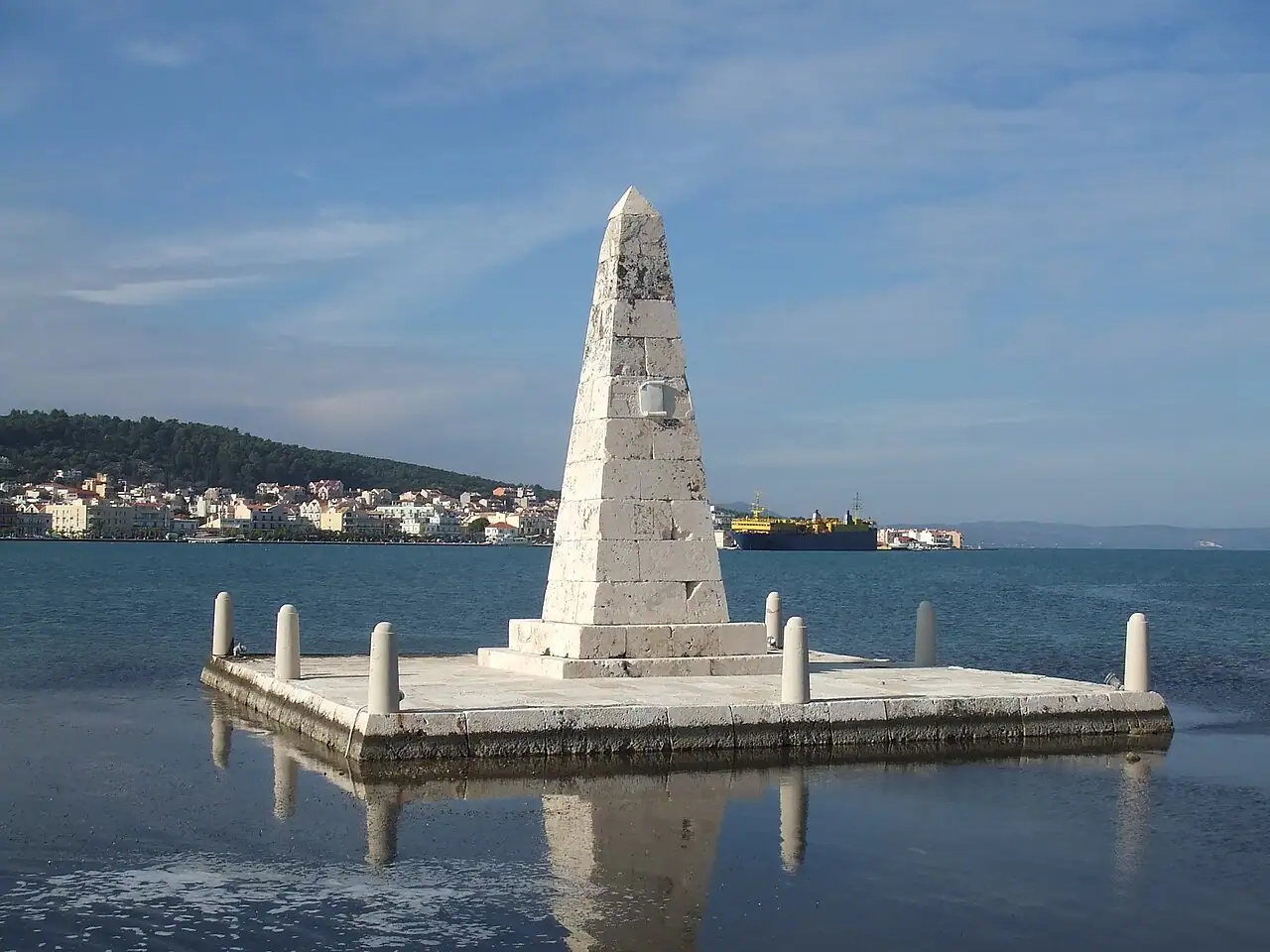
Argostoli is the relaxed capital of Kefalonia, the largest of the Ionian Islands, and ships dock right on its waterfront, a short walk from the main square. The town itself is pleasant rather than spectacular; the real draws are a short drive away: the underground lake of Melissani Cave, the famous white curve of Myrtos Beach and the hillside village of Assos.
More ports in this region
Where Greek Isles cruises start
Cruise lines that sail Greek Isles
Greek Isles cruise tips
- Pick a midship cabin on a lower deck for July and August sailings. The meltemi can make Aegean crossings rolly, and that’s where you feel motion least.
- On Santorini, plan your return to the cable car well before your last tender. Queues at the top can run long in the afternoon, and the alternative is a steep walk down hundreds of steps shared with mules.
- Carry cash for small tavernas, beach loungers and church donation boxes. Cards are widely accepted in towns, but not everywhere on smaller islands.
- Bring a hat, sunscreen and a refillable water bottle to every archaeological site. Knossos, Delos and the Acropolis have little shade, and Delos has very few facilities.
- Dress modestly for monasteries such as those on Patmos: covered shoulders, and skirts or long trousers. Some provide wraps at the entrance, but don’t count on it.
Greek Isles cruises: FAQs
When is the best time to cruise the Greek islands?
Late May, June and September. The sea is warm enough to swim, the days are long and the strong summer meltemi winds and peak crowds of July and August are behind you or not yet arrived. Early October is a good-value option with warm days.
How many days do you need for a Greek Isles cruise?
Seven nights is ideal. That covers Mykonos, Santorini, Rhodes, Crete and Ephesus at a comfortable pace. A 3- or 4-night cruise from Athens works well as part of a longer land trip in Greece.
Which Greek islands do cruise ships visit?
Santorini and Mykonos appear on almost every itinerary, followed by Rhodes, Crete (Heraklion or Chania), Corfu and Patmos. Smaller ships add islands such as Hydra, Milos, Paros, Kefalonia and Zakynthos.
Do I need a passport for a Greek Isles cruise?
Yes, for every traveler, including children, and most cruise lines want it valid for six months beyond the trip. If your itinerary includes Kuşadası or Bodrum in Türkiye, check Türkiye’s entry rules for your nationality as well.
Which cruise line is best for the Greek islands?
Celestyal is the specialist, with short Athens round trips and Greek food and culture on board. For big-ship amenities, look at Celebrity, Royal Caribbean, MSC, Norwegian or Virgin Voyages. Windstar, Star Clippers, Seabourn and Silversea reach smaller islands.
Is the sea warm enough to swim on a Greek Isles cruise?
From June to early October, yes. The Aegean warms to the low 70s °F (22–23°C) by June and peaks around 77°F (25°C) in August. In May and late October it’s brisk, in the upper 60s °F (around 20°C), and in April it’s too cold for most people.
Updated November 2026 by the BookMyDreamCruise editorial team. How we research and fact-check.
Sources: Wikidata, NASA POWER climate data.