Cruise port · Italy · Western Mediterranean
Cagliari, Sardinia cruise port guide
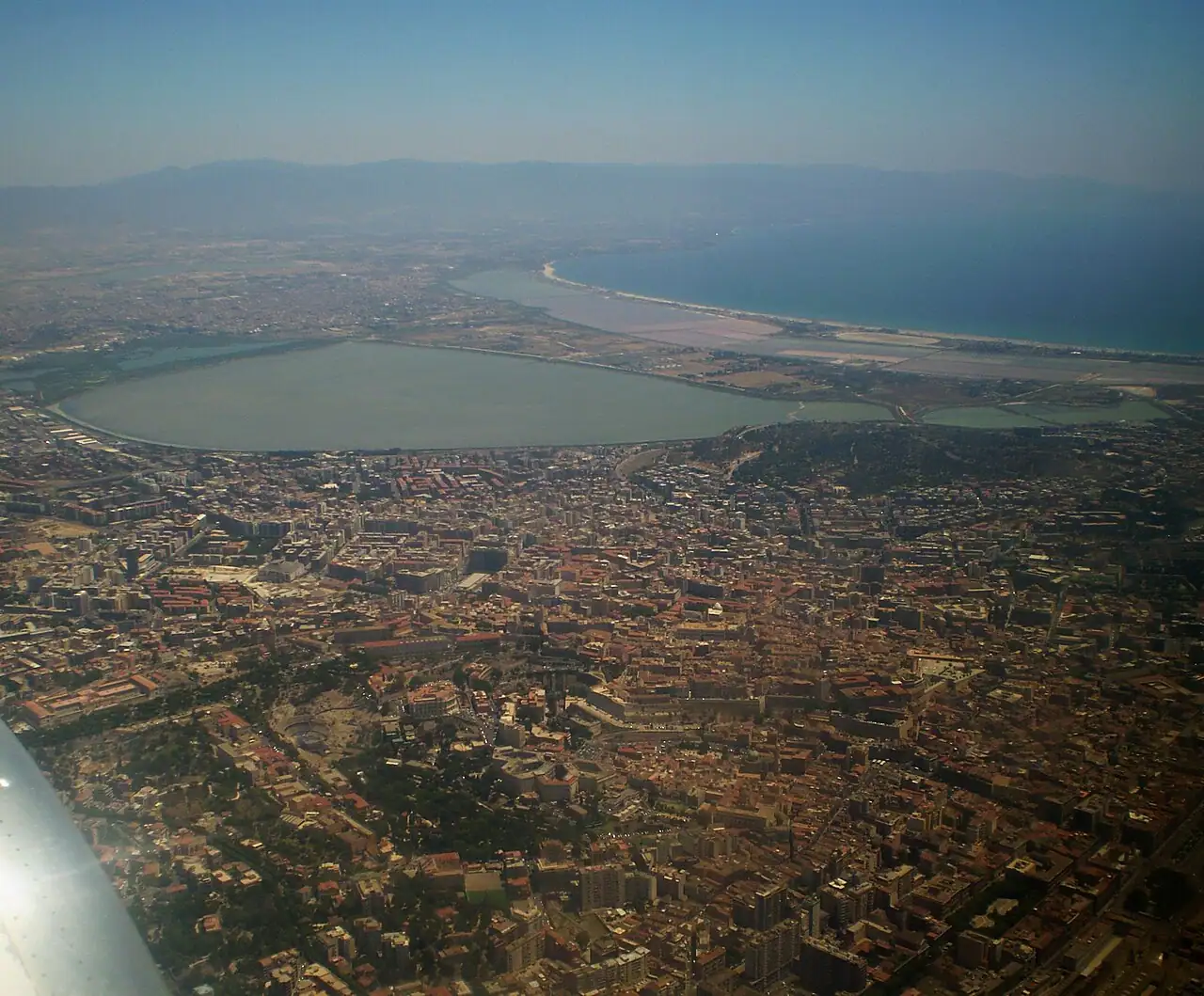
Cagliari, Sardinia’s capital, is a sun-baked port where ships dock along the waterfront below a walled hilltop citadel called Castello. You can explore medieval towers and viewpoints, see the island’s mysterious Bronze Age statues, spot pink flamingos in the salt flats and swim at the long Poetto beach, all within easy reach.
- Medieval citadel
- Beaches
- Flamingos
- Ancient history
- Sardinian food
Photo: cristianocani, CC BY 2.0, via Wikimedia Commons
- Country
- Italy
- Region
- Western Mediterranean
- Type of stop
- Cruise port
- Language
- Italian, with Sardinian spoken locally. English is spoken at major sights.
- Currency
- Euro (€). Cards are widely accepted.
- Best time to visit
- May–September
- Average highs
- 58–84°F through the year
About Cagliari, Sardinia
Cagliari climbs a hill above a wide bay, its old Castello quarter ringed by Pisan walls and towers built in the 1300s. Below lie the arcaded Via Roma, the Marina district’s narrow streets of restaurants, and lagoons where flamingos feed within sight of the city.
A port day here is easy and varied: climb to Castello for the Bastione di Saint Remy and the cathedral, visit the archaeological museum to see the island’s ancient nuraghe culture, then head to Poetto beach or the Molentargius salt flats. Longer excursions go to the UNESCO-listed nuraghe of Su Nuraxi or the ruins of Nora. Cagliari is relaxed and uncrowded, ideal for travelers who like to explore at their own pace.
Where cruise ships dock in Cagliari, Sardinia
Ships dock in the port along the city waterfront. Depending on the berth, the Via Roma arcades and the Marina district are a 5–20 minute walk, and a shuttle often runs from farther piers. Castello is uphill, but public elevators help with the climb from the lower town. Poetto beach is about 15–20 minutes away by bus or taxi. Su Nuraxi di Barumini is about an hour’s drive, and Nora about 45 minutes.
Best things to do in Cagliari, Sardinia on a cruise
- 1
Castello quarter and Bastione di Saint Remy
history
Climb through the medieval Castello district, past the Torre dell’Elefante and Torre di San Pancrazio, to the grand Bastione di Saint Remy terrace with views over the city, harbor and lagoons. Public elevators save legs on the steepest stretches.
- 2
Cagliari Cathedral
history
The Cathedral of Santa Maria in Castello has a Pisan-Romanesque-style facade and a richly decorated interior. Its crypt, carved into the rock, is lined with niches holding relics of hundreds of martyrs.
- 3
National Archaeological Museum
history
In the Citadel of Museums in Castello, this museum displays bronze statuettes from Sardinia’s nuraghe civilization and some of the Giants of Mont’e Prama, monumental stone warriors that are among the oldest large statues in the western Mediterranean.
- 4
Poetto beach
beach
This long sandy beach stretches for miles along the bay, with shallow, clear water, beach bars and the headland known as the Devil’s Saddle (Sella del Diavolo) at one end. It’s a short bus or taxi ride from the center.
- 5
Molentargius flamingos
wildlife
Between the city and Poetto, the Molentargius–Saline nature park’s salt pans and lagoons host large flocks of pink flamingos for much of the year. Walk or bike the paths for close views; it’s free and easy to combine with the beach.
- 6
Su Nuraxi di Barumini
history
About an hour inland, this UNESCO World Heritage site is the most impressive of Sardinia’s nuraghi, Bronze Age stone towers surrounded by the ruins of a village. Guided tours take you inside the central fortress. It works best as an excursion.
Cagliari, Sardinia weather by month
| Month | Jan | Feb | Mar | Apr | May | Jun | Jul | Aug | Sep | Oct | Nov | Dec |
|---|---|---|---|---|---|---|---|---|---|---|---|---|
| High °F (°C) | 5815 | 5815 | 6016 | 6317 | 6921 | 7725 | 8329 | 8429 | 8027 | 7423 | 6719 | 6116 |
| Low °F (°C) | 5312 | 5312 | 5412 | 5714 | 6217 | 7021 | 7624 | 7725 | 7323 | 6820 | 6216 | 5614 |
| Rain in (mm) | 2.052 | 1.947 | 2.358 | 1.744 | 2.255 | 1.230 | 0.12 | 0.820 | 1.641 | 2.665 | 5.7146 | 4.9125 |
| Daylight (hrs) | 10 | 11 | 12 | 13 | 14 | 15 | 15 | 14 | 12 | 11 | 10 | 9 |
What to eat and drink in Cagliari, Sardinia
Sardinian cooking is distinctive. Try malloreddus, small ridged pasta often served with sausage and tomato; culurgiones, stuffed pasta pinched in a wheat-ear pattern; and fregola, toasted pasta pearls with clams. Pane carasau is a crisp flatbread, and bottarga (cured mullet roe) is grated over pasta. For dessert, seadas are fried pastries filled with cheese and drizzled with honey. Drink Cannonau red or Vermentino white, and finish with mirto, a myrtle-berry liqueur. The covered San Benedetto market is a great place to browse.
Tips for your port day
- Use the public elevators to reach Castello rather than climbing in the heat.
- Poetto gets busy at weekends in summer. Go early and bring a towel; some areas have paid sunbeds.
- Many shops close in the afternoon, but restaurants in the Marina district stay lively.
- Pack sun protection; Cagliari is one of the sunnier cities in Italy.
Cruise lines that visit Cagliari, Sardinia
Often on the same itinerary
Cagliari, Sardinia cruise FAQs
Can you walk from the Cagliari cruise port to the old town?
Yes. The Marina district is a short walk from the ship, and Castello is uphill but reachable on foot or by public elevator.
How far is Poetto beach from the Cagliari cruise terminal?
About 15–20 minutes by bus or taxi. It’s a long sandy beach with clear water and plenty of beach bars.
What is Cagliari known for?
Its medieval Castello quarter, Sardinia’s nuraghe heritage, flamingos in the city’s salt flats and the long Poetto beach.
Is Su Nuraxi worth visiting from Cagliari on a cruise?
Yes, if you’re interested in ancient history. It’s about an hour away and the best example of Sardinia’s Bronze Age towers.
Is Cagliari safe?
Yes. Cagliari is generally safe and relaxed. Take normal precautions with valuables in crowded areas.
Updated November 2026 by the BookMyDreamCruise editorial team. How we research and fact-check.
Sources: Wikipedia, Wikidata, NASA POWER climate data.