Best time to cruise · Good time to go
Mediterranean cruises in August
Busy, hot and expensive. Much of Italy takes its holiday around Ferragosto on August 15, so some family-run shops close while beaches and ferries overflow. The Aegean’s meltemi wind can make Greek island tender stops bumpy. The upside is the warmest swimming of the year and long, lively evenings ashore.
- Good time to go
- Avg high 87°F
- 14 hrs daylight
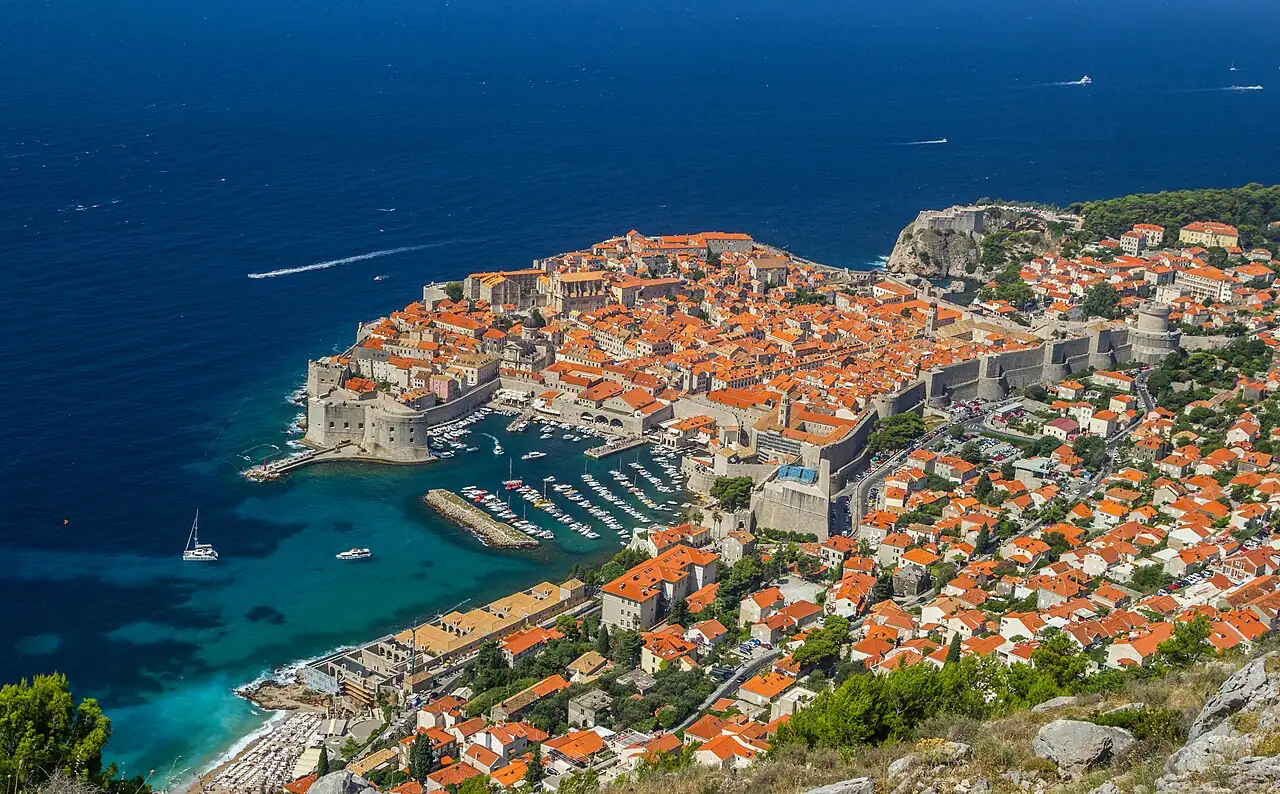
Photo: Zysko serhii, CC BY-SA 4.0, via Wikimedia Commons
Mediterranean in August: Good time to go
Busy, hot and expensive. Much of Italy takes its holiday around Ferragosto on August 15, so some family-run shops close while beaches and ferries overflow. The Aegean’s meltemi wind can make Greek island tender stops bumpy. The upside is the warmest swimming of the year and long, lively evenings ashore.
Across Mediterranean cruise ports, August brings average highs around 87°F (31°C) and lows near 75°F, with about 1.2 inches of rain over the month and roughly 14 hours of daylight.
- Verdict
- Good time to go
- Season
- April to October; MSC and Costa run some Western Med routes year-round
- Average high / low
- 87°F / 75°F
- Rainfall (month)
- 1.2 in
- Daylight
- About 14 hours
- Typical cruise length
- 7 to 12 nights; 3- to 5-night samplers and 14-night voyages also run
What to pack: light, breathable clothes, swimwear, a sun hat, sunglasses and reef-safe sunscreen, plus a light layer for air-conditioned rooms.
How August compares with the rest of the year
- Jan: Shoulder season
- Feb: Shoulder season
- Mar: Shoulder season
- Apr: Good time to go
- May: Best time to go
- Jun: Best time to go
- Jul: Good time to go
- Aug: Good time to go
- Sep: Best time to go
- Oct: Good time to go
- Nov: Shoulder season
- Dec: Shoulder season
- No regular sailings
- Shoulder season
- Good time to go
- Best time to go
Mediterranean weather in August
| Month | Jan | Feb | Mar | Apr | May | Jun | Jul | Aug | Sep | Oct | Nov | Dec |
|---|---|---|---|---|---|---|---|---|---|---|---|---|
| High °F (°C) | 5513 | 5714 | 6015 | 6518 | 7222 | 8127 | 8730 | 8731 | 8127 | 7323 | 6518 | 5815 |
| Low °F (°C) | 478 | 489 | 5010 | 5412 | 6116 | 7021 | 7524 | 7524 | 7021 | 6317 | 5613 | 5010 |
| Rain in (mm) | 3.383 | 2.768 | 2.667 | 1.845 | 2.051 | 1.435 | 0.922 | 1.230 | 2.153 | 2.769 | 3.795 | 3.281 |
| Daylight (hrs) | 10 | 11 | 12 | 13 | 15 | 15 | 15 | 14 | 12 | 11 | 10 | 9 |
August weather port by port
| Port | Avg high | Avg low | Rain | Daylight |
|---|---|---|---|---|
| Barcelona | 91°F | 73°F | 1.6 in | 14 h |
| Rome | 85°F | 75°F | 1.3 in | 14 h |
| Athens | 92°F | 76°F | 0.5 in | 14 h |
| Santorini | 81°F | 77°F | 0.2 in | 14 h |
| Naples | 94°F | 74°F | 1.4 in | 14 h |
| Livorno (for Florence & Pisa) | 80°F | 76°F | 1.6 in | 14 h |
| Venice | 85°F | 73°F | 3.3 in | 14 h |
| Dubrovnik | 85°F | 78°F | 1.8 in | 14 h |
| Mykonos | 78°F | 76°F | 0.2 in | 14 h |
| Kuşadası (for Ephesus) | 103°F | 75°F | 0.2 in | 14 h |
| Villefranche-sur-Mer (for Nice) | 81°F | 77°F | 1.3 in | 14 h |
| Istanbul | 86°F | 74°F | 0.7 in | 14 h |
Average daily highs and lows, 2015–2024, from NASA POWER, adjusted to sea level. Rain is the average monthly total.
Other great cruise destinations in August
Mediterranean in August: FAQs
Is August a good time to cruise Mediterranean?
Yes, it's a good month. Busy, hot and expensive. Much of Italy takes its holiday around Ferragosto on August 15, so some family-run shops close while beaches and ferries overflow. The Aegean’s meltemi wind can make Greek island tender stops bumpy. The upside is the warmest swimming of the year and long, lively evenings ashore.
What is the weather like on a Mediterranean cruise in August?
Across Mediterranean cruise ports, August brings average highs around 87°F (31°C) and lows near 75°F, with about 1.2 inches of rain over the month and roughly 14 hours of daylight. Conditions vary from port to port and day to day.
What should I pack for a Mediterranean cruise in August?
Pack light, breathable clothes, swimwear, a sun hat, sunglasses and reef-safe sunscreen, plus a light layer for air-conditioned rooms. Check your cruise line's dress code for evenings.
When is the best time to cruise Mediterranean?
April to October; MSC and Costa run some Western Med routes year-round. The best months are usually May, June, September.
Where else can I cruise in August?
August is also a top month for Alaska, Canada & New England, Northern Europe, Norwegian Fjords, Baltic Sea.
Updated November 2026 by the BookMyDreamCruise editorial team. How we research and fact-check.
Sources: NASA POWER climate data.