Ocean crossings & world cruises
Transatlantic cruises
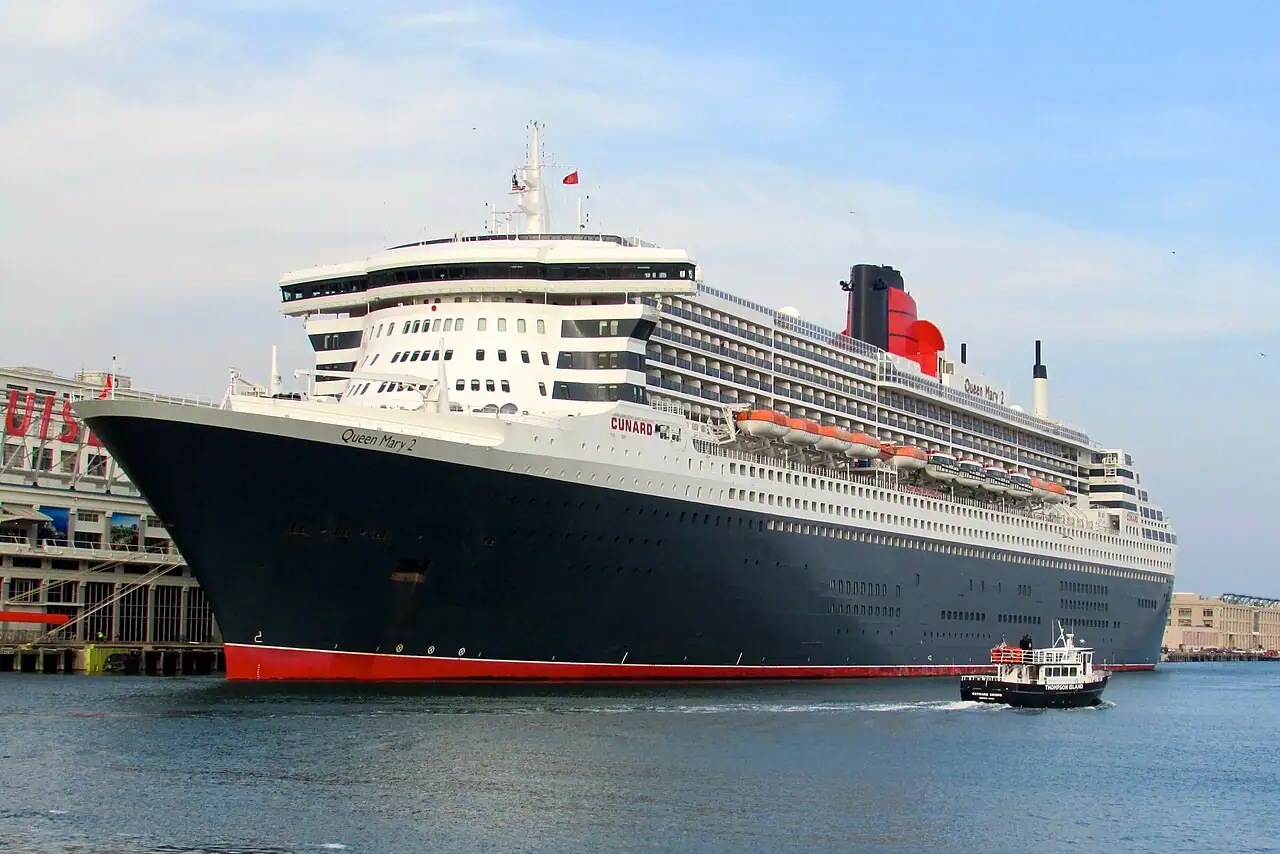
Transatlantic cruises cross between North America and Europe in 7 to 16 nights. Cunard’s Queen Mary 2 sails scheduled 7-night crossings between New York and Southampton for much of the year, while most other lines offer repositioning voyages: eastbound from Florida to Spain, Italy or England in spring, and westbound in fall, often via the Azores, Madeira or the Canary Islands. Expect many consecutive sea days and some of the best per-night fares in cruising.
- Season: Repositioning March to May and October to December; Queen Mary 2 crossings for much of the year.
- Typical length: 7 nights on Queen Mary 2; 12 to 16 nights for repositioning voyages
Photo: Oceanhistory46, CC BY-SA 4.0, via Wikimedia Commons
- Season
- Repositioning March to May and October to December; Queen Mary 2 crossings for much of the year.
- Typical length
- 7 nights on Queen Mary 2; 12 to 16 nights for repositioning voyages
- Best months
- Apr, May, Oct, Nov
- Main departure ports
- Southampton (London), New York City, Fort Lauderdale
- Ports covered here
- 0
- Cruise lines
- 16 lines sail here
What a Transatlantic cruise is like
A transatlantic crossing is cruising at its most relaxed. Instead of a port every day, you get a week or more at sea to read, attend lectures, take classes, try every restaurant and watch the ocean. Many travelers use a crossing to start or end a European trip without the jet lag of a long flight, since clocks change by an hour on most nights.
There are two main types. Cunard’s Queen Mary 2, the only ship built as an ocean liner still in regular transatlantic service, makes classic 7-night crossings between New York and Southampton, with formal nights, a planetarium and even kennels for dogs and cats. Repositioning cruises are one-way voyages as ships move between seasons; they usually leave Florida for Europe from March to May and return from October to December, with a few island stops along the way.
Southern routes call at Bermuda, the Azores, Madeira or the Canary Islands and enjoy milder weather. Northern routes in late summer link Northern Europe with New England or Canada via Iceland, Greenland and Newfoundland. Expect at least five or six consecutive sea days and the possibility of rough seas, particularly in the North Atlantic in fall.
Best time to cruise Transatlantic
- Jan: No regular sailings
- Feb: No regular sailings
- Mar: Good time to go
- Apr: Best time to go
- May: Best time to go
- Jun: Good time to go
- Jul: Good time to go
- Aug: Good time to go
- Sep: Good time to go
- Oct: Best time to go
- Nov: Best time to go
- Dec: Shoulder season
- No regular sailings
- Shoulder season
- Good time to go
- Best time to go
Transatlantic in JanuaryNo regular sailings
January is the quietest month for crossings, since most ships are in the Caribbean or on world voyages and winter gales make the North Atlantic at its roughest. In some years Queen Mary 2 spends the early months on a long voyage away from the Atlantic. If you want an off-season crossing, check Cunard’s calendar; otherwise use the month to reserve a spring repositioning cabin.
Transatlantic in FebruaryNo regular sailings
February brings the strongest winter storms and biggest swells of the year to the North Atlantic, and almost no ships cross. Southern routes stay mild, but repositioning season hasn’t started. It’s a good time to compare spring voyages, because balcony cabins on popular April sailings from Fort Lauderdale and Miami tend to go first.
Transatlantic in MarchGood time to go
Spring repositioning gets underway late in March, with the first eastbound ships leaving Florida for Barcelona, Rome and Southampton. Southern routes are mild, with Bermuda and the Azores in the 60s °F, though breezy sea days call for a jacket. Lines are keen to fill these one-way voyages, so per-night fares are among the lowest of the year.
Transatlantic in AprilBest time to go
April is the busiest month for eastbound repositioning, as dozens of ships leave the Caribbean for a European summer. Madeira’s spring Flower Festival can fill Funchal with floral carpets and parades if your timing lines up. Seas are usually moderate, and you’ll step off in a Mediterranean that’s warming up but not yet crowded.
Transatlantic in MayBest time to go
May brings the final spring repositioning voyages and steady Queen Mary 2 crossings, with milder air and lengthening daylight on deck. In iceberg season, liners follow a more southerly track to stay well clear of ice drifting off Newfoundland. Arriving in Southampton, Lisbon or Barcelona in May means pleasant weather and fewer crowds than in summer.
Transatlantic in JuneGood time to go
June crossings are mostly Queen Mary 2’s, with the longest daylight of the year, often calm seas and fog banks near the Grand Banks of Newfoundland. Few other lines cross now because their ships are busy in Europe and Alaska. Summer travel lifts demand from mid-month, so book popular westbound dates early.
Transatlantic in JulyGood time to go
July usually has some of the gentlest North Atlantic weather, making it a good month for a first crossing if you worry about seasickness. Queen Mary 2 sails full with families, solo travelers and people relocating with pets in the ship’s kennels. Days at sea are mild but rarely hot, so pack a sweater for evening deck walks.
Transatlantic in AugustGood time to go
Late August brings the first northern-route voyages from Northern Europe to New England and Canada via Iceland and Greenland, with long daylight and icebergs drifting in Greenland’s fjords. Queen Mary 2 crossings continue. Atlantic hurricane season ramps up, which can affect southern routes passing near Bermuda.
Transatlantic in SeptemberGood time to go
September is prime time for the northern route through Reykjavík, Greenland’s Prince Christian Sound and Newfoundland, with darker nights that can bring the northern lights. It’s the peak of hurricane season, so southern itineraries via Bermuda may reroute, but Queen Mary 2 crossings run on schedule most weeks.
Transatlantic in OctoberBest time to go
October is the heart of fall repositioning, with westbound voyages from Barcelona, Rome, Lisbon and Southampton to Florida via the Canary Islands, Madeira and the Azores. The southern route is warm, often in the 70s °F, while the North Atlantic turns stormier. With so many ships crossing at once, fares are excellent.
Transatlantic in NovemberBest time to go
Westbound repositioning continues through November as ships head for the Caribbean winter season. Southern routes stay mild, and some voyages celebrate Thanksgiving at sea with a full holiday dinner. The North Atlantic is increasingly rough, so the Canary Islands route is the more comfortable choice this late in the year.
Transatlantic in DecemberShoulder season
A few late repositioning voyages finish in early December, and Cunard schedules holiday crossings in some years, with Christmas trees and festive entertainment on board. The North Atlantic is cold and stormy, so expect a lively ride on northern tracks. Holiday crossings are scarce and book up early.
Average weather across Transatlantic ports
| Month | Jan | Feb | Mar | Apr | May | Jun | Jul | Aug | Sep | Oct | Nov | Dec |
|---|---|---|---|---|---|---|---|---|---|---|---|---|
| High °F (°C) | 5915 | 6015 | 6217 | 6519 | 7021 | 7524 | 7926 | 7926 | 7625 | 7122 | 6519 | 6116 |
| Low °F (°C) | 5211 | 5211 | 5412 | 5714 | 6116 | 6619 | 7021 | 7122 | 6820 | 6418 | 5815 | 5513 |
| Rain in (mm) | 2.872 | 2.462 | 2.564 | 2.563 | 2.769 | 2.974 | 2.358 | 2.770 | 3.487 | 3.793 | 3.282 | 3.179 |
| Daylight (hrs) | 10 | 11 | 12 | 13 | 15 | 15 | 15 | 14 | 12 | 11 | 10 | 9 |
Transatlantic cruise highlights
- 1
Queen Mary 2 crossing
Seven nights between New York and Southampton aboard Cunard’s flagship, with afternoon tea, ballroom dancing, lectures, the Illuminations planetarium and gala evenings. Arriving in New York past the Statue of Liberty at dawn is a classic moment.
- 2
The Azores
Ponta Delgada on São Miguel is the gateway to the twin crater lakes of Sete Cidades, the hot springs and volcanic stews of Furnas, and the Gorreana tea estate, one of very few tea plantations in Europe. It’s a welcome green stop halfway across the Atlantic on many repositioning voyages.
- 3
Madeira
In Funchal, ride the cable car to Monte and come back down in a wicker toboggan steered by men in straw hats, taste Madeira wine, or walk the levadas, irrigation channels lined with trails through laurel forest.
- 4
Canary Islands
Tenerife’s Teide National Park, home to Spain’s highest mountain, and Gran Canaria’s dunes at Maspalomas are frequent stops on southern crossings. Mild weather makes these islands welcome after days at sea.
- 5
Iceland and Greenland
Northern routes in late summer and early fall call at Reykjavík and Greenland’s colorful settlements, and may include scenic cruising through Prince Christian Sound, a narrow fjord lined with glaciers and granite peaks.
- 6
Days at sea
Six or more days without a port are what make a crossing special. Lines add extra lectures by historians and scientists, cooking demonstrations, wine tastings and classes, and Queen Mary 2’s library is one of the largest at sea. Many people simply read, nap and watch the ocean for hours.
Typical Transatlantic itineraries
- 1
7-night Queen Mary 2 between New York and Southampton
Scheduled crossings in both directions, with no ports in between. Popular as a one-way trip combined with a flight.
- 2
12- to 15-night spring repositioning from Florida to Europe
From Fort Lauderdale, Miami or Port Canaveral to Barcelona, Rome or Southampton, often with stops in Bermuda, the Azores, Madeira or the Canary Islands.
- 3
12- to 16-night fall repositioning from Europe to Florida
Westbound voyages from Barcelona, Rome, Lisbon or Southampton to Florida or the Caribbean, often via the Canary Islands, Madeira or the Azores.
- 4
Northern route via Iceland and Greenland
Late-summer voyages of 14 nights or more between Northern Europe and New England or Canada, calling at Iceland, Greenland and sometimes Newfoundland.
- 5
Tall-ship crossings
Star Clippers’ sailing ships make occasional transatlantic voyages between Europe and the Caribbean under sail, a very different, slower experience.
Transatlantic ports of call






Where Transatlantic cruises start
Cruise lines that sail Transatlantic
Transatlantic cruise tips
- Book a one-way flight carefully. Open-jaw airfare can cost more than the cruise, so compare options before committing.
- Bring a passport with plenty of validity. The UK now requires an Electronic Travel Authorisation for US and Canadian visitors, and the EU is introducing new entry systems, so check current rules.
- Choose a mid-ship cabin on a lower deck if you’re prone to seasickness. Fall crossings in particular can be rough.
- Expect an hour’s time change most nights. Eastbound crossings lose an hour each night, while westbound voyages gain an hour.
- Pack for sea days: books, a light jacket for deck walks, and an outfit or two for formal nights, especially on Queen Mary 2.
Transatlantic cruises: FAQs
How long does a transatlantic cruise take?
Queen Mary 2 crosses between New York and Southampton in 7 nights. Repositioning cruises with island stops usually take 12 to 16 nights.
When is the best time for a transatlantic cruise?
April and May for spring repositioning to Europe, and October and November for fall repositioning to Florida. Summer offers calmer seas on Queen Mary 2. Winter crossings are rare and can be rough.
Are transatlantic cruises rough?
They can be, especially in the North Atlantic in fall and winter. Southern routes via the Azores and Canary Islands are usually milder. Modern ships have stabilizers, and seasickness remedies help.
Do I need a passport for a transatlantic cruise?
Yes. You’ll arrive in Europe or North America from abroad and need a valid passport. The UK requires an Electronic Travel Authorisation for US and Canadian visitors, so check current entry rules.
Which cruise line is best for a transatlantic crossing?
Cunard’s Queen Mary 2 for a classic ocean liner crossing. For repositioning voyages, Royal Caribbean, Celebrity, Norwegian, MSC, Princess and Holland America offer many options, while Oceania, Viking, Regent and Silversea provide smaller, premium ships.
Why are transatlantic cruises so cheap?
Repositioning voyages are one-way and have many sea days, so lines often price them low to fill cabins. Factor in the cost of a one-way flight when comparing value.
Updated November 2026 by the BookMyDreamCruise editorial team. How we research and fact-check.
Sources: Wikidata, NASA POWER climate data.