Cruise port · Portugal · Canary Islands & Atlantic Isles
Ponta Delgada, Azores cruise port guide
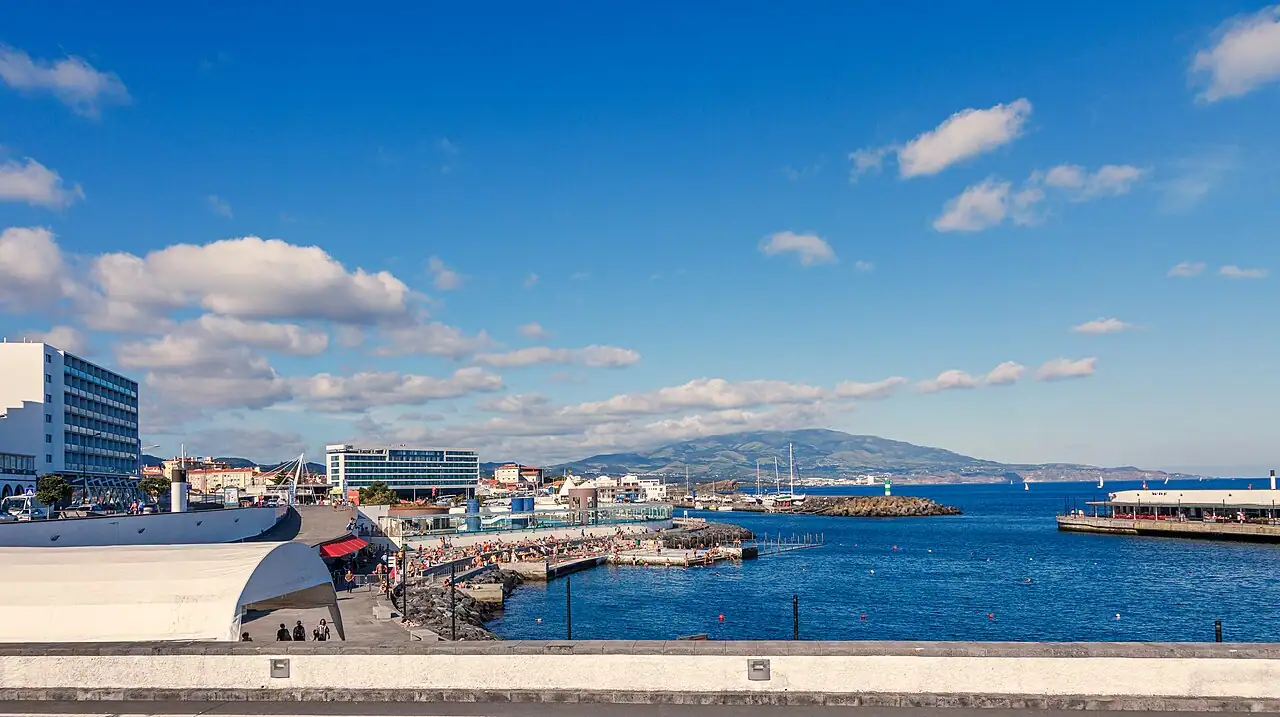
Ponta Delgada, on São Miguel in Portugal’s Azores, is a mid-Atlantic port where ships dock right on the city waterfront. It’s a gateway to volcanic crater lakes at Sete Cidades, the hot springs and geothermal cooking of Furnas, Europe’s rare tea plantations and some of the world’s best whale watching.
- Crater lakes
- Whale watching
- Hot springs
- Unspoiled nature
- Transatlantic stop
Photo: Bo Mertz, CC BY-SA 2.0, via Wikimedia Commons
- Country
- Portugal
- Region
- Canary Islands & Atlantic Isles
- Type of stop
- Cruise port
- Language
- Portuguese. Most guides, drivers and restaurant staff speak English.
- Currency
- Euro (€). Cards are widely accepted.
- Best time to visit
- January–December
- Average highs
- 62–76°F through the year
About Ponta Delgada, Azores
The Azores are a remote archipelago of volcanic islands about 900 miles (1,450 km) west of Portugal, often visited on transatlantic crossings. São Miguel is the largest and greenest, nicknamed the Green Island for its pastures, hydrangea-lined roads and crater lakes. Ponta Delgada, its capital, has black-and-white cobbled streets, whitewashed churches and a relaxed pace.
Most cruisers head out of town: to the twin lakes of Sete Cidades, the hot springs of Furnas, or to sea on a whale-watching trip. Those who stay can explore the city’s gates, churches and gardens. The Azores suit nature lovers and anyone seeking somewhere unspoiled; weather is changeable, and clouds can hide crater views, so flexible plans help.
Where cruise ships dock in Ponta Delgada, Azores
Ships dock at the Portas do Mar cruise terminal, right on the waterfront. The historic center and the Portas da Cidade (city gates) are just a few minutes’ walk away. Taxis and tour operators wait near the terminal. Sete Cidades is about 30–40 minutes by road, Lagoa do Fogo about 40 minutes and Furnas about 45–60 minutes. Whale-watching boats leave from the marina beside the terminal. The Azores are an hour behind mainland Portugal, so confirm ship time.
Best things to do in Ponta Delgada, Azores on a cruise
- 1
Sete Cidades
scenery
Inside a huge volcanic crater, the twin lakes of Sete Cidades, one blue and one green, are the Azores’ most famous view. The Miradouro da Vista do Rei looks down on both. Clouds can roll in, so check conditions before you go.
- 2
Furnas
nature
This valley village is full of hot springs and steaming fumaroles. Bathe in the iron-rich thermal pool at Terra Nostra Garden (it stains light swimsuits) and try cozido das Furnas, a stew slow-cooked in the volcanic ground by the lake.
- 3
Whale and dolphin watching
wildlife
The Azores are one of the world’s great whale-watching destinations. Sperm whales are seen year-round, and spring brings migrating species. Boats leave from the marina near the terminal; trips last around three hours and depend on sea conditions.
- 4
Lagoa do Fogo
nature
Set in a crater high in the island’s center, the Lake of Fire is surrounded by unspoiled slopes and often wrapped in mist. Viewpoints along the road give dramatic views, and a trail descends to the shore.
- 5
Gorreana Tea Plantation
food
One of Europe’s few tea plantations, Gorreana has been producing tea since the 1880s. Walk among the tea bushes, see the old machinery and taste green and black teas for free.
- 6
Ponta Delgada city walk
culture
Stroll from the 18th-century city gates past the Igreja Matriz de São Sebastião, with its carved stone doorway, to the António Borges Garden and its grottoes. A pineapple greenhouse plantation on the edge of town shows how Azorean pineapples are grown.
Ponta Delgada, Azores weather by month
| Month | Jan | Feb | Mar | Apr | May | Jun | Jul | Aug | Sep | Oct | Nov | Dec |
|---|---|---|---|---|---|---|---|---|---|---|---|---|
| High °F (°C) | 6217 | 6216 | 6217 | 6317 | 6519 | 6921 | 7323 | 7624 | 7424 | 7122 | 6720 | 6418 |
| Low °F (°C) | 6016 | 5915 | 5915 | 6016 | 6217 | 6619 | 7021 | 7323 | 7222 | 6820 | 6518 | 6217 |
| Rain in (mm) | 2.666 | 1.743 | 1.537 | 1.743 | 1.743 | 1.231 | 0.717 | 1.127 | 1.744 | 3.075 | 2.870 | 3.179 |
| Daylight (hrs) | 10 | 11 | 12 | 13 | 14 | 15 | 15 | 14 | 12 | 11 | 10 | 10 |
What to eat and drink in Ponta Delgada, Azores
Cozido das Furnas, a meat and vegetable stew cooked underground with volcanic heat, is São Miguel’s signature dish. Try grilled limpets (lapas), local cheeses and bolos lêvedos, sweet muffin-like breads from Furnas. Azorean pineapples are small and very sweet, and pineapple liqueur is a popular souvenir. Wash it down with Gorreana tea or Kima, a passion fruit soda.
Tips for your port day
- Weather changes fast in the Azores. Bring layers and rain gear, and be flexible if crater views are clouded over.
- Book whale watching early, as boats fill up when ships are in port, and be ready for cancellations in rough seas.
- The Azores are an hour behind mainland Portugal; follow ship time for all aboard.
- Bring a dark swimsuit if you plan to bathe in Furnas’ iron-rich thermal pools.
Cruise lines that visit Ponta Delgada, Azores
Often on the same itinerary
Ponta Delgada, Azores cruise FAQs
Can you walk from the Ponta Delgada cruise port to town?
Yes. The Portas do Mar terminal is right on the waterfront, a few minutes’ walk from the historic center and city gates.
Is Sete Cidades worth visiting from Ponta Delgada?
Yes, if the weather cooperates. It’s about 30–40 minutes away, and the twin crater lakes are one of the Azores’ most famous sights.
Can you go whale watching from Ponta Delgada on a cruise?
Yes. Boats leave from the marina near the terminal, and trips last around three hours. Sightings are common, but trips depend on sea conditions.
What is the weather like in the Azores?
Mild year-round but very changeable, with sun, clouds and showers sometimes in the same hour. Pack layers and something waterproof.
What is cozido das Furnas?
It’s a stew of meats and vegetables cooked for hours in pots buried in the volcanic ground near Furnas Lake.
Updated November 2026 by the BookMyDreamCruise editorial team. How we research and fact-check.
Sources: Wikipedia, Wikidata, NASA POWER climate data.