Cruise port · Spain · Canary Islands & Atlantic Isles
Lanzarote cruise port guide
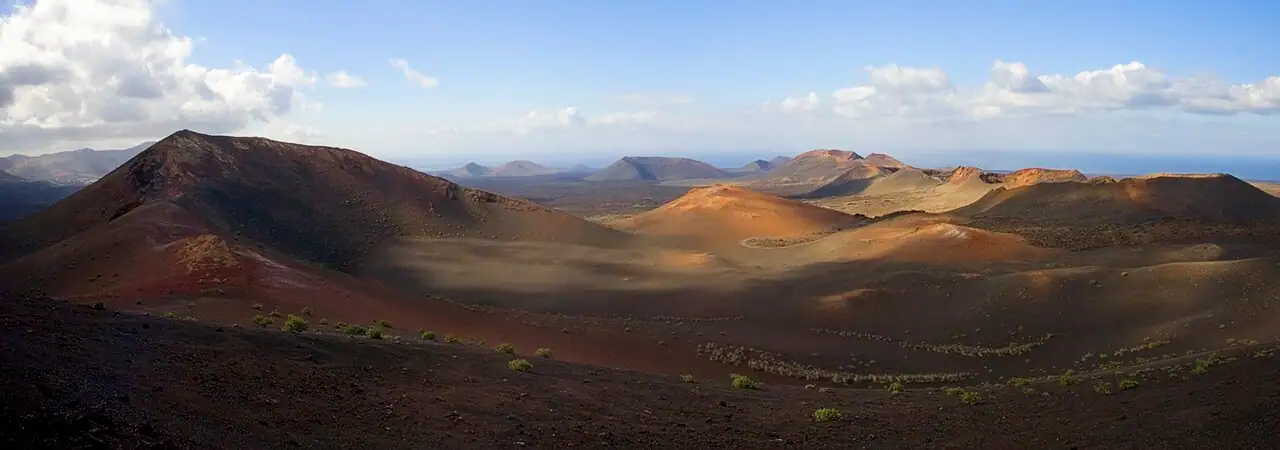
Lanzarote is a volcanic Canary Island of black lava fields and whitewashed villages, and ships dock at Arrecife, the capital, a short shuttle ride from town. The highlights are Timanfaya National Park’s Fire Mountains and the inventive lava-cave creations of artist César Manrique, such as Jameos del Agua, all within about 30–40 minutes.
- Volcano landscapes
- César Manrique
- Wine
- Photography
- Unique scenery
Photo: Gernot Keller, London (www.gernot-keller.com), CC BY-SA 2.5, via Wikimedia Commons
- Country
- Spain
- Region
- Canary Islands & Atlantic Isles
- Type of stop
- Cruise port
- Language
- Spanish. English is common at the main visitor sites and in the resorts.
- Currency
- Euro (€). Cards are widely accepted.
- Best time to visit
- January–December
- Average highs
- 67–76°F through the year
About Lanzarote
Lanzarote looks unlike anywhere else. Massive eruptions in the 1730s buried a quarter of the island in lava, leaving a landscape of craters and cinder cones in shades of black, red and ochre. Local artist César Manrique championed low-rise, whitewashed architecture and turned lava tubes and volcanic bubbles into public art spaces, shaping the island’s distinctive look.
Most cruisers head for Timanfaya National Park to see the volcanic landscape and geothermal demonstrations, then visit one or two Manrique sites. Wine lovers stop at La Geria, where vines grow in volcanic ash pits. Lanzarote suits nature lovers, photographers and anyone curious about volcanoes. Those seeking lush scenery or a charming old port town may find Arrecife itself modest.
Where cruise ships dock in Lanzarote
Ships dock at the cruise terminal on the Muelle de los Mármoles, about 2 miles (3 km) from Arrecife’s center. A shuttle bus usually runs to town, and taxis wait at the terminal. Arrecife’s waterfront, the Charco de San Ginés lagoon and the Castillo de San José are easy to explore on foot. Timanfaya is about 30–40 minutes by road, Jameos del Agua about 30 minutes and the Fundación César Manrique about 15 minutes. The Canaries are an hour behind mainland Spain, so keep an eye on ship time.
Best things to do in Lanzarote on a cruise
- 1
Timanfaya National Park
nature
The Fire Mountains are a vast field of craters and lava flows. Park coaches follow the Route of the Volcanoes, as you can’t drive or hike freely. At Islote de Hilario, rangers pour water into the ground to create steam geysers, and the El Diablo restaurant grills food over volcanic heat.
- 2
Jameos del Agua
culture
Manrique transformed a collapsed lava tube into a series of spaces with a saltwater lagoon home to tiny blind white crabs found almost nowhere else, a swimming pool and an auditorium. It’s one of the island’s most memorable sites.
- 3
Fundación César Manrique
culture
Manrique’s former home in Tahíche was built into five volcanic bubbles, connected by tunnels, with a garden and pool above. It now displays his artwork and collection and explains his vision for the island.
- 4
La Geria wine region
food
Vines grow in individual hollows dug into the black volcanic ash, each protected by a low stone wall from the wind. Wineries such as El Grifo offer tastings of malvasía volcánica and other local wines.
- 5
Mirador del Río and Cueva de los Verdes
scenery
Mirador del Río, another Manrique design, is a clifftop viewpoint over the island of La Graciosa. Nearby, Cueva de los Verdes is a lava tube explored on guided tours with a clever surprise at the end.
- 6
Jardín de Cactus
nature
Manrique’s final major project is a terraced garden of thousands of cacti from around the world, set in an old quarry and overlooked by a windmill. It’s a photogenic and unusual stop.
Lanzarote weather by month
| Month | Jan | Feb | Mar | Apr | May | Jun | Jul | Aug | Sep | Oct | Nov | Dec |
|---|---|---|---|---|---|---|---|---|---|---|---|---|
| High °F (°C) | 6720 | 6719 | 6720 | 6920 | 7021 | 7323 | 7424 | 7624 | 7625 | 7624 | 7323 | 7021 |
| Low °F (°C) | 6317 | 6217 | 6217 | 6418 | 6619 | 6820 | 7021 | 7222 | 7222 | 7122 | 6820 | 6519 |
| Rain in (mm) | 0.821 | 0.717 | 0.37 | 0.12 | 0.615 | 0.718 | 0.01 | 0.12 | 0.38 | 0.717 | 0.49 | 0.410 |
| Daylight (hrs) | 11 | 11 | 12 | 13 | 14 | 14 | 14 | 13 | 12 | 11 | 11 | 10 |
What to eat and drink in Lanzarote
Try papas arrugadas with mojo, fresh fish such as cherne (wreckfish) and local goat cheese. Gofio, toasted grain flour, appears in soups and desserts. Lanzarote’s malvasía volcánica wines are unique, grown in volcanic ash. The El Diablo restaurant in Timanfaya grills meat and fish over geothermal heat, and Arrecife’s Charco de San Ginés has casual seafood spots.
Tips for your port day
- Timanfaya can only be toured by park coach; allow enough time for lines at busy periods.
- Lanzarote can be windy and the sun is strong; bring a hat, sunscreen and a light jacket.
- Several Manrique sites can be visited on one ticket or excursion; plan to see two or three in a day.
- Lanzarote keeps the same clock as London and Lisbon, an hour behind mainland Spain. Work from ship time so the gap doesn’t catch you out.
Cruise lines that visit Lanzarote
Often on the same itinerary
Lanzarote cruise FAQs
How far is the Lanzarote cruise port from Arrecife?
About 2 miles (3 km). A shuttle bus usually runs to town, and taxis are available at the terminal.
Is Timanfaya National Park worth visiting on a cruise?
Yes. It’s Lanzarote’s top attraction, about 30–40 minutes from the port, with dramatic volcanic scenery and geothermal demonstrations.
Can you see Lanzarote on your own from the cruise ship?
Yes, by taxi or rental car. Distances are short, but an excursion makes it easy to combine Timanfaya with Manrique sites.
What is Jameos del Agua?
It’s a lava tube transformed by artist César Manrique into a cave with a saltwater lagoon, garden, pool and auditorium.
Is there a beach near Arrecife cruise port?
Yes. Playa del Reducto is Arrecife’s town beach, a short taxi ride away. The famous Papagayo beaches are about 45 minutes south.
Updated November 2026 by the BookMyDreamCruise editorial team. How we research and fact-check.
Sources: Wikipedia, Wikidata, NASA POWER climate data.