Cruise port · Spain · Western Europe
A Coruña cruise port guide
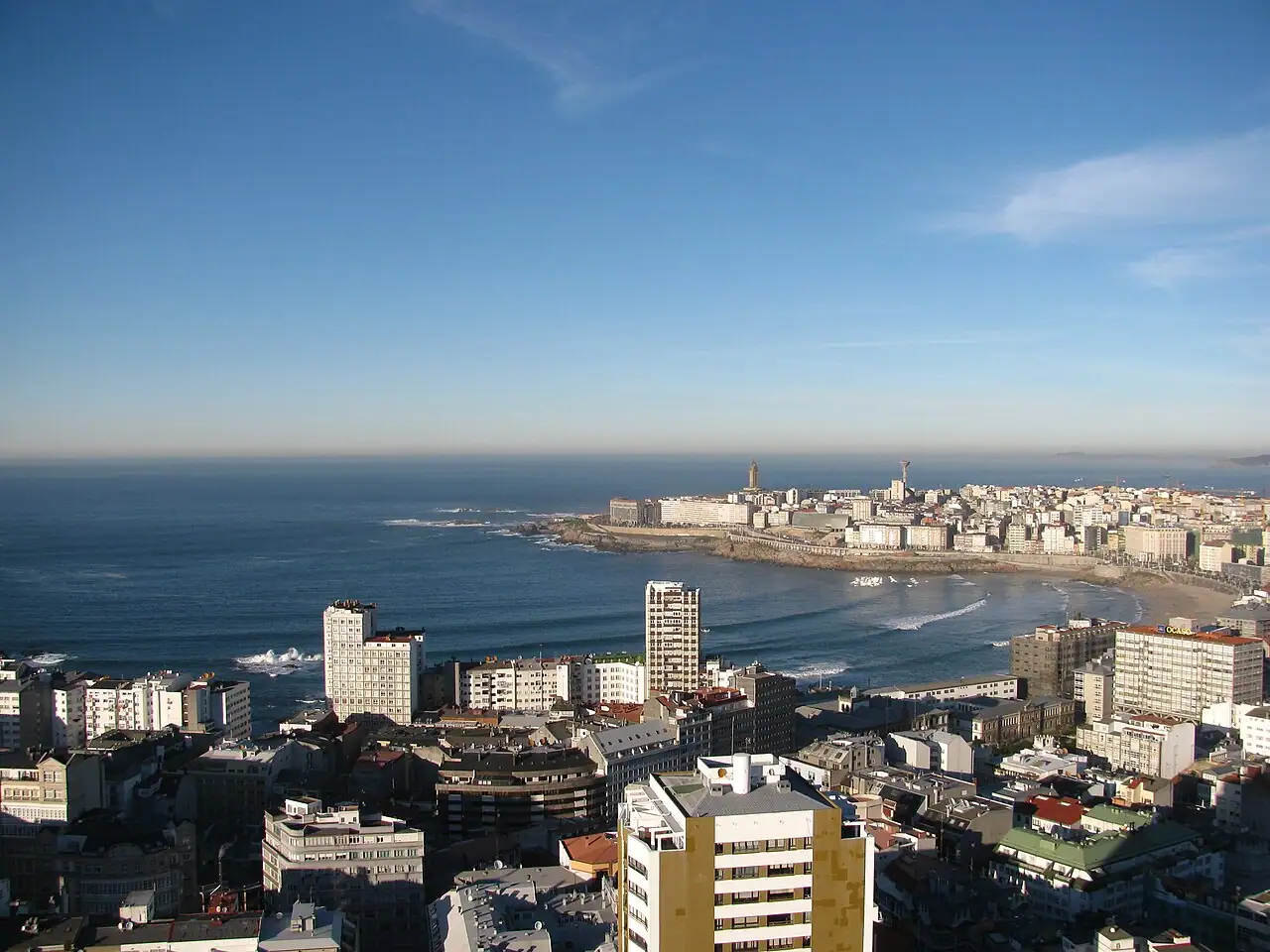
A Coruña is a breezy Galician port city where ships dock right in the center, beside a waterfront lined with glass-enclosed balconies. Walk to the Tower of Hercules, the world’s oldest Roman lighthouse still in use, feast on octopus and seafood, or take an excursion to the pilgrimage city of Santiago de Compostela, about an hour away.
- Seafood
- Roman lighthouse
- Santiago de Compostela
- Seafront walks
- Walkable port
Photo: Pablo Herrero from LA CORUÑA, Spain, CC BY 2.0, via Wikimedia Commons
- Country
- Spain
- Region
- Western Europe
- Type of stop
- Cruise port
- Language
- Spanish and Galician. English is spoken in tourist areas but less widely than in southern Spain.
- Currency
- Euro (€). Cards are widely accepted.
- Best time to visit
- May–September
- Average highs
- 56–78°F through the year
About A Coruña
A Coruña sits on a peninsula on Spain’s rugged northwest coast, in the green, rainy region of Galicia. It’s known as the City of Glass for the white-framed glass galleries on its seafront buildings, and its long promenade wraps around beaches, parks and headlands for miles.
Port days divide between the city and Santiago de Compostela, the end point of the Camino de Santiago pilgrimage, with its great cathedral and medieval streets. Staying in A Coruña means a relaxed day of the Tower of Hercules, María Pita Square, the old town and a tapas crawl. It suits food lovers and walkers; pack a rain jacket, as Atlantic weather can change quickly.
Where cruise ships dock in A Coruña
Ships dock at the cruise terminal in the heart of the city, steps from the glass galleries of the Avenida da Marina and a few minutes’ walk from María Pita Square and the old town. The Tower of Hercules is about 1.5 miles (2.5 km) away, a pleasant 30–40 minute walk along the promenade or a short taxi ride. Santiago de Compostela is about 45 miles (70 km) away, roughly 45–60 minutes by road, and fast trains from A Coruña station take around 30–40 minutes.
Best things to do in A Coruña on a cruise
- 1
Tower of Hercules
history
Built by the Romans nearly 2,000 years ago and later restored, this lighthouse is the oldest Roman lighthouse still in use and a UNESCO World Heritage Site. Climb the stairs inside for views of the coast, then explore the sculpture park around it.
- 2
Avenida da Marina and María Pita Square
culture
The seafront’s glass galleries gleam in the sun and give the city its nickname. A few steps inland, María Pita Square is dominated by the grand city hall and named after a local heroine who helped defend the city against Francis Drake’s English fleet in 1589.
- 3
Old town (Ciudad Vieja)
history
The small old town has quiet squares, Romanesque churches and the Jardín de San Carlos, a garden on the old walls that holds the tomb of British general Sir John Moore, killed at the Battle of Corunna in 1809.
- 4
Paseo Marítimo
scenery
The city’s long seafront promenade loops around the peninsula past Riazor and Orzán beaches, the Tower of Hercules and rocky headlands. Walk or rent a bike for part of it, stopping at the Domus science museum and the Aquarium Finisterrae.
- 5
Santiago de Compostela
history
The cathedral, said to hold the remains of St. James, is the destination of pilgrims walking the Camino de Santiago. Explore the Praza do Obradoiro, the medieval old town (a UNESCO site) and its arcaded streets. The giant incense burner, the Botafumeiro, swings only on certain occasions.
- 6
Tapas streets and Mercado de San Agustín
food
Calle de la Estrella, Calle Franja and the surrounding streets are packed with tapas bars serving octopus, shellfish and Padrón peppers. The Mercado de San Agustín, a covered market, displays Galicia’s outstanding seafood.
A Coruña weather by month
| Month | Jan | Feb | Mar | Apr | May | Jun | Jul | Aug | Sep | Oct | Nov | Dec |
|---|---|---|---|---|---|---|---|---|---|---|---|---|
| High °F (°C) | 5613 | 5714 | 5915 | 6418 | 6820 | 7222 | 7725 | 7826 | 7524 | 7021 | 6217 | 5815 |
| Low °F (°C) | 478 | 478 | 479 | 4910 | 5412 | 5814 | 6116 | 6217 | 6016 | 5614 | 5211 | 4910 |
| Rain in (mm) | 5.4138 | 4.4111 | 4.6116 | 3.384 | 2.665 | 2.461 | 0.718 | 1.334 | 2.154 | 5.5139 | 5.9151 | 5.8147 |
| Daylight (hrs) | 9 | 10 | 12 | 13 | 15 | 15 | 15 | 14 | 12 | 11 | 10 | 9 |
What to eat and drink in A Coruña
Galicia is famous for seafood. Order pulpo á feira, tender octopus with paprika, olive oil and sea salt served on a wooden plate, plus goose barnacles (percebes), mussels and scallops. Pimientos de Padrón are small green peppers, mostly mild with the occasional hot one. Try empanada gallega, tetilla cheese and tarta de Santiago, an almond cake. Drink Albariño white wine or Estrella Galicia beer, brewed in A Coruña.
Tips for your port day
- Bring a rain jacket and layers; Galicia’s weather is changeable even in summer.
- If you go to Santiago on your own, check train times and leave a generous buffer for the return.
- Lunch is served late in Spain, often from around 2 p.m.; tapas bars are a good option if you’re hungry earlier.
- Walk the promenade one way to the Tower of Hercules and take a taxi or bus back to save time.
Cruise lines that visit A Coruña
Often on the same itinerary

A Coruña cruise FAQs
Can you walk from the A Coruña cruise port into the city?
Yes. Ships dock in the city center, a few minutes’ walk from the Avenida da Marina, María Pita Square and the old town.
How far is A Coruña from Santiago de Compostela?
About 45 miles (70 km). It’s roughly 45–60 minutes by road, and fast trains take around 30–40 minutes.
Can you walk to the Tower of Hercules from the cruise ship?
Yes. It’s about 1.5 miles (2.5 km), a 30–40 minute walk along the seafront promenade, or a short taxi ride.
What food is A Coruña known for?
Seafood, especially pulpo á feira (Galician octopus), percebes and shellfish, along with Padrón peppers, empanada gallega and Albariño wine.
Is Santiago de Compostela worth visiting on a cruise?
Yes. Its cathedral and medieval old town are among Spain’s highlights, and it’s an easy excursion from A Coruña.
Updated November 2026 by the BookMyDreamCruise editorial team. How we research and fact-check.
Sources: Wikipedia, Wikidata, NASA POWER climate data.