Cruise port · Spain · Western Europe
Vigo cruise port guide
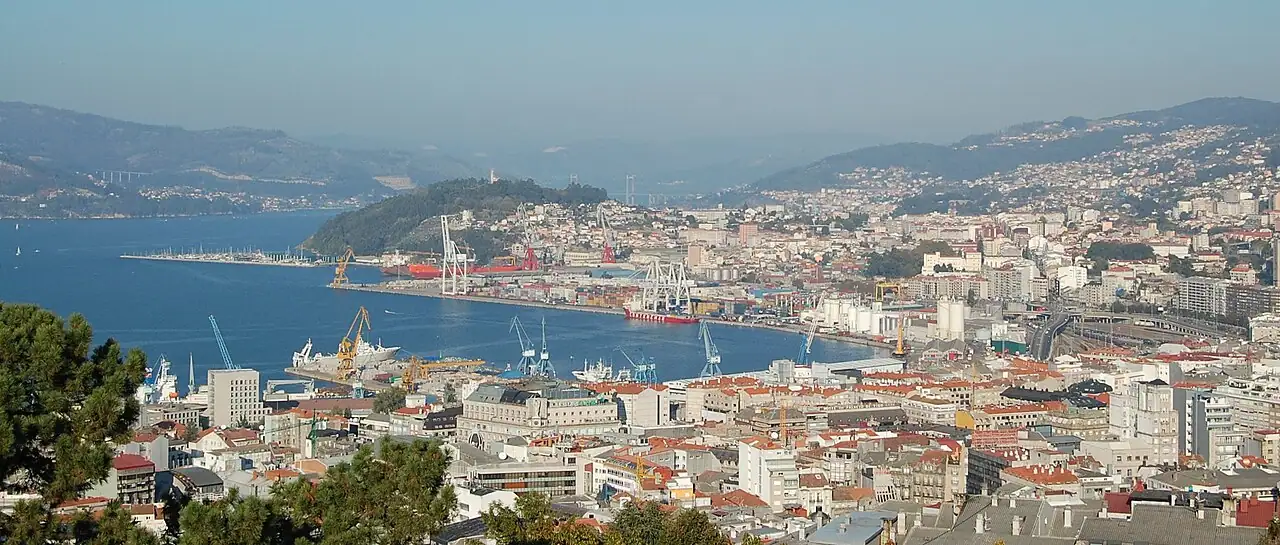
Vigo is Galicia’s largest city and one of Europe’s biggest fishing ports, and ships dock right in the center, steps from the old town and its famous oyster street. It’s a gateway to the Cíes Islands’ white-sand beaches, the fortress town of Baiona, the Albariño wine country and Santiago de Compostela.
- Seafood and oysters
- Island beaches
- Albariño wine
- Santiago day trips
- Walkable port
Photo: derivative work: Kanchelskis ( talk ) Centro_e_porto_de_Vigo.jpg : User:Dantadd, CC BY-SA 2.5, via Wikimedia Commons
- Country
- Spain
- Region
- Western Europe
- Type of stop
- Cruise port
- Language
- Spanish and Galician. English is less widely spoken than in tourist resorts.
- Currency
- Euro (€). Cards are widely accepted.
- Best time to visit
- May–September
- Average highs
- 57–82°F through the year
About Vigo
Vigo is a working port city on a deep Atlantic inlet, the Ría de Vigo, sheltered by the Cíes Islands at its mouth. Its hilly old town, Casco Vello, tumbles down to the harbor, and seafood is central to life here, from oyster stalls to rafts of mussels farmed in the bay.
Port days can stay local, with the old town, oysters and the views from Monte do Castro, or head to the Cíes Islands, part of a national park with some of Spain’s most beautiful beaches. Other options include Baiona, where news of Columbus’s discovery first reached Europe, or a wine tour in the Rías Baixas. Vigo suits seafood lovers and nature lovers; it’s a practical city rather than a postcard one.
Where cruise ships dock in Vigo
Ships dock at the cruise terminal right in the city center, and the Casco Vello and oyster street are about a five-minute walk away. Ferries to the Cíes Islands leave from the waterfront nearby and take about 40–45 minutes. Baiona is about 30 minutes by road, Pontevedra roughly 30 minutes and Santiago de Compostela about an hour. Vigo is hilly, so expect some climbs in the old town and up Monte do Castro.
Best things to do in Vigo on a cruise
- 1
Cíes Islands
beach
These islands, part of the Atlantic Islands of Galicia National Park, are known for Rodas beach, a curving strip of white sand facing a calm lagoon. Ferries run mainly in the warmer months. Visitor numbers are capped, so you need an advance authorization as well as a ferry ticket.
- 2
Casco Vello and the oyster street
food
In the old town, Rúa da Pescadería is known for its oyster sellers, who shuck fresh oysters at stalls for you to eat at nearby tables with a glass of Albariño. The surrounding lanes are full of tapas bars and seafood restaurants.
- 3
Monte do Castro
scenery
A hilltop park with the remains of a 17th-century fortress offers panoramic views over the city, the ría and the Cíes Islands. It’s a steep walk or a short taxi ride from the center.
- 4
Baiona
history
In 1493, the caravel Pinta arrived in Baiona, bringing the first news of Columbus’s voyage to the Americas. A replica of the ship is moored in the harbor, and the Monterreal fortress walls make a scenic walk.
- 5
Santiago de Compostela
history
About an hour away, the pilgrimage city’s cathedral and medieval old town are a UNESCO World Heritage Site. Excursions often combine Santiago with Pontevedra’s charming pedestrian old town.
- 6
Rías Baixas wine country
food
The Albariño grape thrives along the Rías Baixas coast, especially around Cambados. Wine tours visit family estates for tastings of the crisp white wine, often paired with seafood.
Vigo weather by month
| Month | Jan | Feb | Mar | Apr | May | Jun | Jul | Aug | Sep | Oct | Nov | Dec |
|---|---|---|---|---|---|---|---|---|---|---|---|---|
| High °F (°C) | 5714 | 5915 | 6116 | 6519 | 7021 | 7524 | 8228 | 8228 | 7826 | 7122 | 6317 | 5915 |
| Low °F (°C) | 468 | 478 | 489 | 5110 | 5513 | 5815 | 6217 | 6217 | 6016 | 5714 | 5211 | 499 |
| Rain in (mm) | 6.2157 | 4.9124 | 5.2132 | 4.5114 | 3.180 | 2.255 | 0.615 | 1.026 | 2.666 | 6.6168 | 6.5166 | 7.3186 |
| Daylight (hrs) | 9 | 11 | 12 | 13 | 15 | 15 | 15 | 14 | 12 | 11 | 10 | 9 |
What to eat and drink in Vigo
Oysters from the Rúa da Pescadería are a must, along with mussels from the rafts in the ría, octopus (pulpo á feira), razor clams (navajas) and small scallops called zamburiñas. Empanada gallega and tetilla cheese are Galician staples. Albariño, the local white wine, pairs perfectly with seafood. Finish with tarta de Santiago, an almond cake.
Tips for your port day
- Arrange Cíes Islands authorization and ferry tickets well ahead; numbers are strictly limited in season.
- Bring layers and a rain jacket; the Atlantic weather can change quickly.
- Eat oysters at the Rúa da Pescadería stalls for a classic Vigo experience.
- Vigo is hilly. Wear comfortable shoes and take a taxi up to Monte do Castro if needed.
Cruise lines that visit Vigo
Often on the same itinerary
Vigo cruise FAQs
Can you walk from the Vigo cruise port to the old town?
Yes. The cruise terminal is in the city center, and the Casco Vello is about a five-minute walk away.
Can you visit the Cíes Islands from Vigo on a cruise?
Yes, in season. Ferries take about 40–45 minutes. You need an advance authorization and a ferry ticket, as visitor numbers are capped.
How far is Vigo from Santiago de Compostela?
About an hour by road. Many cruise lines offer it as an excursion, sometimes combined with Pontevedra.
What is Vigo known for?
Its fishing port, oyster street, the nearby Cíes Islands and its location in the Rías Baixas, home of Albariño wine.
Is Baiona worth visiting from Vigo?
Yes. It’s about 30 minutes away, with a fortress, a replica of Columbus’s Pinta and a pretty harbor.
Updated November 2026 by the BookMyDreamCruise editorial team. How we research and fact-check.
Sources: Wikipedia, Wikidata, NASA POWER climate data.