Asia, Australia & the Pacific
Dubai & Arabian Gulf cruises
Arabian Gulf cruises sail round trip from Dubai or Abu Dhabi to Doha in Qatar, Muscat and the Musandam fjords in Oman, Bahrain and island beaches such as Sir Bani Yas, usually on 7-night itineraries. The season is short and fixed: roughly November to March, when highs sit in the 70s and low 80s °F (24–29°C). Summer heat is so extreme that regular cruising stops from about April to October.
- Season: Roughly November to March; no regular sailings in the summer heat
- Typical length: 7 nights round trip from Dubai or Abu Dhabi; longer repositioning voyages in spring and fall
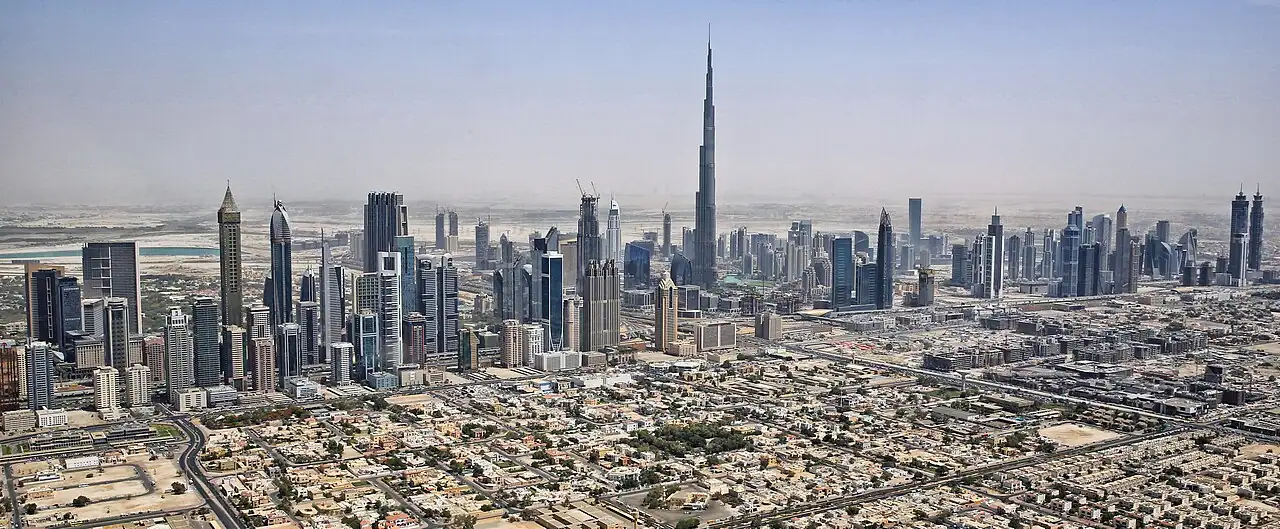
Photo: Tim Reckmann from Hamm, Deutschland, CC BY-SA 3.0, via Wikimedia Commons
- Season
- Roughly November to March; no regular sailings in the summer heat
- Typical length
- 7 nights round trip from Dubai or Abu Dhabi; longer repositioning voyages in spring and fall
- Best months
- Jan, Feb, Dec
- Main departure ports
- Dubai
- Ports covered here
- 3
- Cruise lines
- 10 lines sail here
What a Dubai & the Arabian Gulf cruise is like
A Gulf cruise is a winter-sun trip with skyscrapers, souks and desert. In a week you can ride to the top of the Burj Khalifa, cross Dubai Creek by wooden abra, step into the white marble Sheikh Zayed Grand Mosque in Abu Dhabi, browse Doha’s Museum of Islamic Art and stroll Muscat’s corniche below old Portuguese forts. Ports are modern and efficient, distances between them are short, and itineraries often include an overnight in Dubai or Abu Dhabi.
European lines dominate in winter, including MSC, Costa, AIDA and Celestyal, alongside Royal Caribbean, Celebrity and luxury ships on longer voyages and world cruises. For North Americans, it pairs well with a few days in Dubai, a major airline hub with nonstop flights from many US and Canadian cities. It suits travelers curious about the modern Middle East who want comfort, sunshine and easy logistics.
Learn the local customs before you go. Dress modestly away from beaches and pools, covering shoulders and knees in souks and mosques, and women should carry a headscarf. Public displays of affection are frowned upon and alcohol is served mainly in hotels and licensed venues. Ramadan falls within the cruise season through the end of the 2020s, bringing shorter opening hours and the expectation that visitors avoid eating or drinking in public during daylight, especially in Qatar and Oman.
Ships arrive and leave on long repositioning voyages in fall and spring, traditionally through the Suez Canal and Red Sea. Security concerns in the Red Sea have sent many of those voyages around Africa in recent years, so check the routing of any one-way trip, and review the U.S. State Department travel advisory for the region before you buy flights.
Best time to cruise Dubai & the Arabian Gulf
- Jan: Best time to go
- Feb: Best time to go
- Mar: Good time to go
- Apr: Shoulder season
- May: No regular sailings
- Jun: No regular sailings
- Jul: No regular sailings
- Aug: No regular sailings
- Sep: No regular sailings
- Oct: No regular sailings
- Nov: Good time to go
- Dec: Best time to go
- No regular sailings
- Shoulder season
- Good time to go
- Best time to go
JanuaryBest time to go
The mildest month, with Dubai highs around 75°F (24°C), cool evenings near 60°F (15°C) and sea temperatures in the low 70s °F (22°C). The Dubai Shopping Festival, running from mid-December into January, brings sales, concerts and fireworks. Demand and fares are at their peak.
FebruaryBest time to go
Still pleasant, with highs in the mid-70s °F (24–25°C). Winter shamal winds occasionally blow sand haze across the coast, and brief rain is possible. Ramadan begins in February in 2027 and in late January in 2028, moving about 11 days earlier each year, so check whether it overlaps your dates.
MarchGood time to go
Warming into the low-to-mid 80s °F (27–30°C), with humidity creeping up late in the month. Eid al-Fitr, the celebration ending Ramadan, falls in early March in 2027, bringing holiday crowds and festive lights. It’s the last full month of the season before ships begin leaving.
AprilShoulder season
Ships depart on repositioning voyages toward Europe and Asia, and only a few sailings remain early in the month. Highs climb past 90°F (32–35°C). Late-season departures can be good value if you don’t mind the heat, and indoor attractions take over from desert tours.
MayNo regular sailings
There’s no regular cruising once temperatures reach around 100°F (38°C). Dubai shifts indoors, to air-conditioned malls, museums and the ski slope inside the Mall of the Emirates. If you’re in the region, early morning is the only comfortable time to be outdoors.
JuneNo regular sailings
Extreme heat, often 105°F (40°C) or more, with rising coastal humidity. No cruise ships are based in the Gulf, and many residents travel abroad for the summer. Hotels discount heavily, but outdoor sightseeing is limited to the early morning and evening.
JulyNo regular sailings
Typically the hottest month, with highs reaching 110°F (43°C) or more and Gulf water as warm as a bath, around 93°F (34°C). Cruising is suspended until late in the year. Summer sales and family entertainment fill Dubai’s malls.
AugustNo regular sailings
Coastal humidity peaks, making the heat feel even more oppressive, and dust storms can reduce visibility. No cruises operate. Land-trip bargains are easy to find, but this is the hardest month for comfortable sightseeing anywhere in the Gulf.
SeptemberNo regular sailings
Still very hot, with highs around 100°F (38°C) and sticky nights. The cruise season remains weeks away, though hotels and attractions start preparing for winter. Plan and reserve for the season ahead rather than traveling now.
OctoberNo regular sailings
The heat eases toward the mid-90s °F (34–35°C) and the outdoor season stirs, with Dubai’s Global Village, a seasonal cultural fair, reopening around mid-month. Gulf cruise ships typically arrive in November or later, so regular sailings haven’t begun.
NovemberGood time to go
The season opens as ships arrive from Europe. Highs of around 86°F (30°C) early in the month ease to the low 80s °F, and the warm sea is ideal for beach days at Sir Bani Yas. In odd-numbered years the Dubai Airshow fills hotels mid-month.
DecemberBest time to go
Comfortable highs near 77°F (25°C) and festive crowds. UAE National Day on December 2 brings fireworks and parades, and Qatar National Day follows on December 18. Christmas and the Burj Khalifa’s New Year’s Eve fireworks make holiday sailings the priciest of the season.
Average weather across Dubai & the Arabian Gulf ports
| Month | Jan | Feb | Mar | Apr | May | Jun | Jul | Aug | Sep | Oct | Nov | Dec |
|---|---|---|---|---|---|---|---|---|---|---|---|---|
| High °F (°C) | 7625 | 7926 | 8529 | 9233 | 10038 | 10541 | 10641 | 10641 | 10339 | 9736 | 8831 | 8027 |
| Low °F (°C) | 6317 | 6418 | 6920 | 7524 | 8228 | 8731 | 9032 | 9032 | 8730 | 8228 | 7524 | 6820 |
| Rain in (mm) | 0.718 | 0.514 | 0.821 | 0.615 | 0.37 | 0.13 | 0.37 | 2.870 | 0.12 | 0.38 | 0.39 | 0.49 |
| Daylight (hrs) | 11 | 11 | 12 | 13 | 13 | 14 | 14 | 13 | 12 | 12 | 11 | 11 |
Dubai & the Arabian Gulf cruise highlights
- 1
Burj Khalifa and Downtown Dubai
The world’s tallest building has observation decks on the 124th, 125th and 148th floors; sunset slots are the most popular and sell out. At its foot, the Dubai Mall has an aquarium and an ice rink, and the Dubai Fountain stages music-and-water shows every evening.
- 2
Old Dubai: the creek and the souks
Ride an abra, a wooden water taxi, across Dubai Creek for a token fare, then wander the Gold Souk and the Spice Souk. Nearby, the Al Fahidi Historical Neighbourhood preserves coral-stone houses with wind towers, an early form of air conditioning.
- 3
Sheikh Zayed Grand Mosque, Abu Dhabi
One of the world’s largest mosques, with 82 white domes, reflecting pools and one of the largest hand-knotted carpets ever made. It welcomes visitors outside prayer times, with a strict dress code: long, loose clothing for everyone and a headscarf for women.
- 4
Louvre Abu Dhabi
Jean Nouvel’s museum on Saadiyat Island sits under a vast latticed dome that filters sunlight like palm fronds, with art spanning ancient civilizations to the present. Abu Dhabi also offers the presidential palace of Qasr Al Watan and, on Yas Island, the Ferrari World theme park.
- 5
Doha’s Museum of Islamic Art and Souq Waqif
I. M. Pei’s waterfront museum holds a superb collection of Islamic art spanning more than a thousand years, and the National Museum of Qatar is shaped like a desert rose. In the evening, Souq Waqif’s lanes fill with spice sellers, falcon shops and cafés.
- 6
Muscat’s Grand Mosque and Mutrah
Oman’s capital feels low-rise and traditional next to its neighbors. Visit the Sultan Qaboos Grand Mosque, open to non-Muslims on most mornings, then haggle for frankincense and silver in the Mutrah Souq and walk the corniche, which is just steps from the cruise pier.
- 7
Dhow trips in the Musandam fjords
From Khasab, on Oman’s Musandam Peninsula, traditional dhows cruise between steep, bare mountains plunging into the sea, often with dolphins alongside. Stops for swimming and snorkeling make this one of the most relaxing days of a Gulf cruise.
- 8
Desert safari
Afternoon tours from Dubai or Abu Dhabi drive into the dunes by four-wheel drive, with camel rides, sandboarding and a camp dinner. They work best on overnight calls, when you can stay for sunset and the evening program.
Typical Dubai & the Arabian Gulf itineraries
- 1
7-night Gulf round trip from Dubai or Abu Dhabi
Typically Abu Dhabi, Sir Bani Yas Island, a wildlife reserve with a dedicated cruise beach, Doha and sometimes Bahrain or Dammam in Saudi Arabia, with overnights in the UAE. The standard MSC, Costa and AIDA format.
- 2
7-night UAE and Oman
Dubai or Abu Dhabi with Muscat, Khasab and sometimes Fujairah on the UAE’s east coast, trading Qatar’s museums for Oman’s fjords, forts and mountains.
- 3
Gulf to India, Sri Lanka and Asia
Spring repositioning voyages of two to three weeks from Dubai to Singapore via Mumbai, Kochi, Colombo and sometimes the Maldives, popular on premium and luxury lines.
- 4
Repositioning to or from Europe
Long one-way voyages in fall and spring linking the Gulf with the Mediterranean, either via the Suez Canal or, when the Red Sea is considered unsafe, around southern Africa.
Dubai & the Arabian Gulf ports of call
Dubai
Departure port
Abu Dhabi
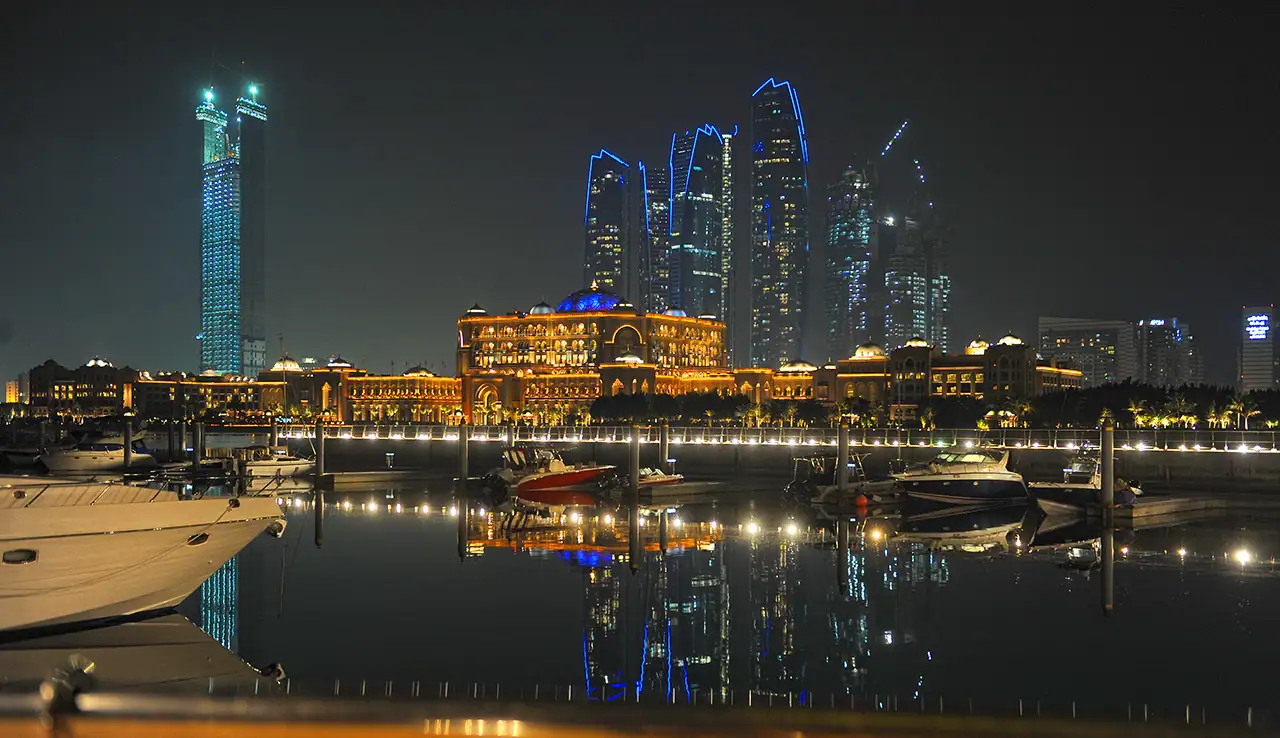
Abu Dhabi, capital of the United Arab Emirates, is a calmer, more cultural counterpart to Dubai, and ships dock at Mina Zayed, about 15 to 30 minutes from the main sights. The highlights are the vast white Sheikh Zayed Grand Mosque, the Louvre Abu Dhabi, the Qasr Al Watan palace and the theme parks of Yas Island. Expect a strict mosque dress code and serious heat outside winter.
Doha
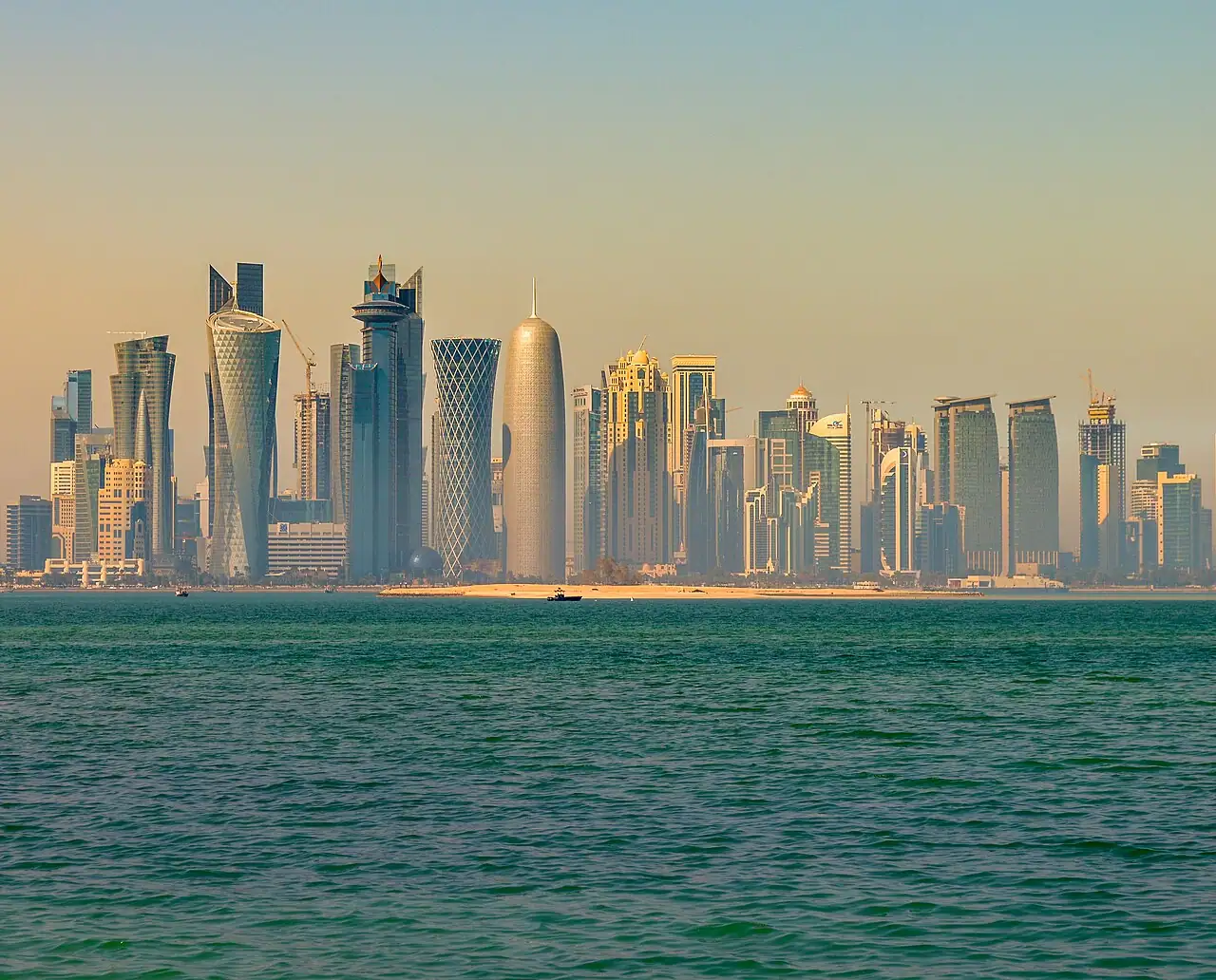
Doha, Qatar’s capital, puts cruise passengers right at its revitalized Old Doha Port, a short walk or ride from the Museum of Islamic Art and the atmospheric Souq Waqif. The city pairs striking modern architecture, such as the National Museum of Qatar, with traditional markets and desert adventures. Modest dress and winter visits are the norm.
Muscat
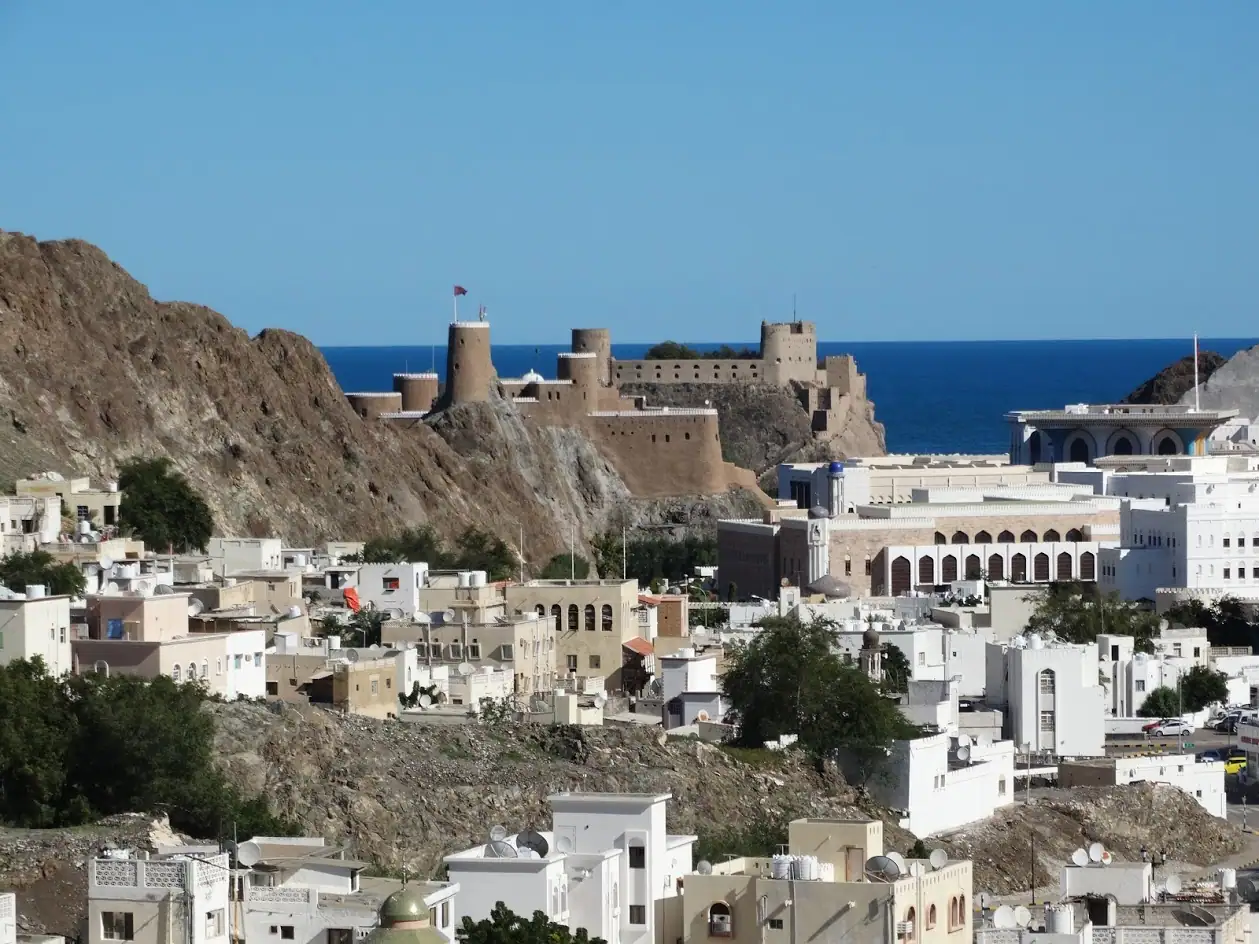
Muscat, Oman’s capital, is one of the most attractive cities in the Gulf, wedged between rugged mountains and the sea. Ships dock at Muttrah, a short walk from the waterfront Corniche and one of Arabia’s oldest souqs, and the Sultan Qaboos Grand Mosque, old Muscat’s forts and palace, and dramatic wadis are within easy reach.
Where Dubai & the Arabian Gulf cruises start
Cruise lines that sail Dubai & the Arabian Gulf
Dubai & the Arabian Gulf cruise tips
- Pack modest outfits for shore days: loose trousers or long skirts, tops that cover shoulders, and a scarf for women for mosque visits. The Sheikh Zayed Grand Mosque and Muscat’s Grand Mosque enforce dress codes at the door.
- Check the UAE’s medication rules before you travel. Some common prescription drugs, including certain painkillers, sedatives and ADHD medications, require advance approval or a doctor’s letter.
- Even in winter, the sun is strong. Carry water, sunscreen and a hat, and schedule desert or outdoor tours for the morning or late afternoon on warmer days.
- Drink only in licensed venues and on the ship, never in public, and never drive after drinking; the UAE and its neighbors have zero tolerance for drink-driving.
- Ask before photographing people, especially women, and avoid photographing government buildings, military sites and airports.
Dubai & Arabian Gulf cruises: FAQs
When is the best time to cruise from Dubai?
December to February. That’s the coolest part of the season, with highs of around 75–77°F (24–25°C), low humidity and pleasant evenings. November and March are warmer but still good, and there are no regular cruises in the summer heat.
Is it safe to cruise the Arabian Gulf?
Generally yes. The UAE, Qatar and Oman have low crime and well-developed tourism, and millions of visitors pass through each winter. Regional tensions can change itineraries, so check the U.S. State Department travel advisory and follow your cruise line’s updates.
Do I need a visa for a Dubai cruise?
Usually not in advance. US and Canadian citizens can generally enter the UAE, Qatar and Oman without a pre-arranged visa for short stays, and cruise lines handle much of the paperwork for port calls. Bahrain and Saudi Arabia have their own rules, so check requirements for every country on your itinerary.
What should I wear on an Arabian Gulf cruise?
Light, modest clothing ashore. Cover shoulders and knees in souks, old towns and mosques, and bring a scarf if you’re a woman. Swimwear is fine on the ship, at hotel pools and on beaches, and a light sweater helps in chilly air-conditioning.
How hot is Dubai during cruise season?
Warm and sunny but comfortable. Highs range from the mid-70s °F (24°C) in January to the mid-80s °F (around 30°C) in November and March, with cooler evenings. From May to September, highs regularly top 100°F (38°C).
Which cruise line is best for the Arabian Gulf?
MSC and Costa have the most Gulf sailings, with ships based in Dubai and Abu Dhabi each winter. Celebrity and Royal Caribbean offer North American–style options in some seasons. Silversea, Seabourn, Regent and Oceania visit on longer voyages through the region.
Updated November 2026 by the BookMyDreamCruise editorial team. How we research and fact-check.
Sources: Wikidata, NASA POWER climate data.