Best time to cruise · Good time to go
Hawaii cruises in October
October is still warm and fairly dry, though the wet season starts to creep in late in the month. Foreign-flagged ships return from Alaska, bringing back West Coast round trips and repositioning voyages. The Kona coffee harvest is underway on the Big Island, and shoulder-season fares make it a smart month for value seekers.
- Good time to go
- Avg high 78°F
- 11 hrs daylight
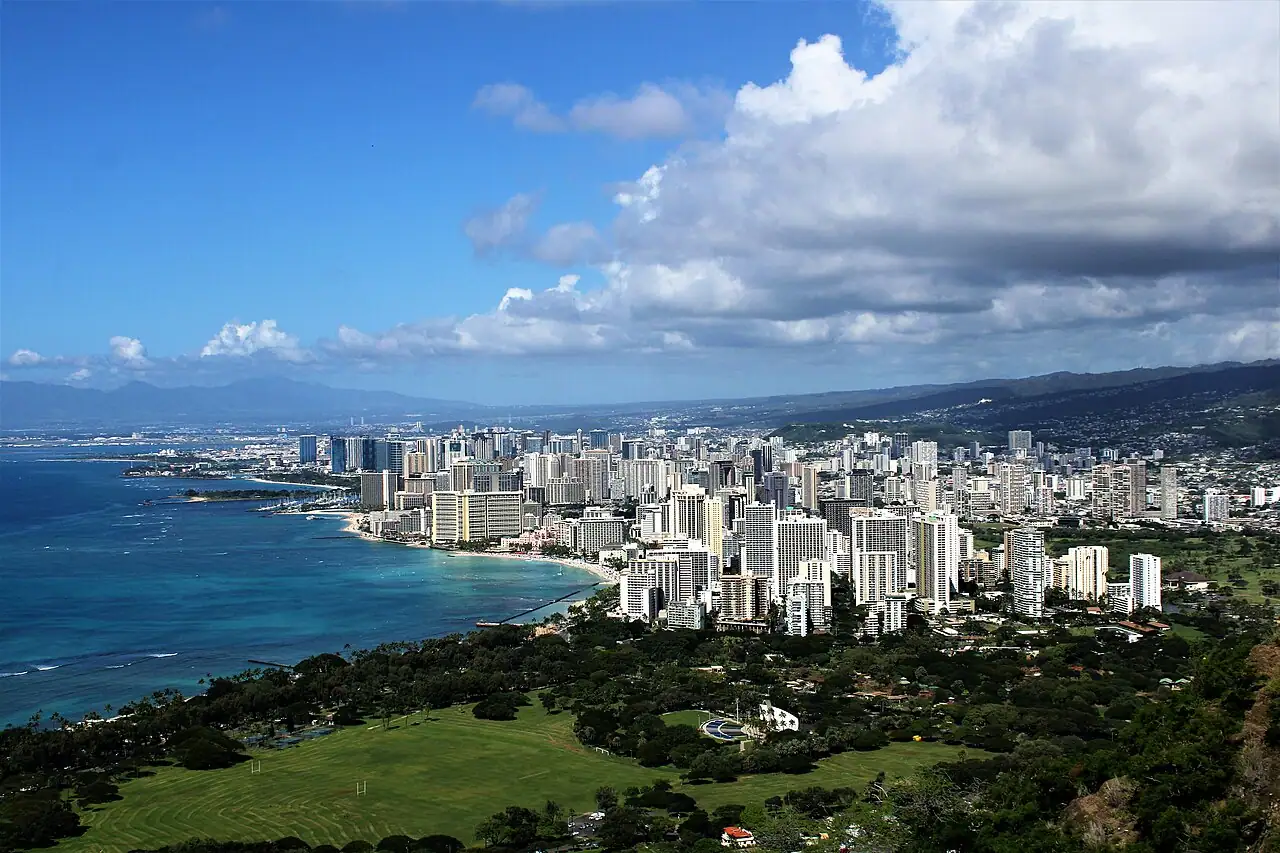
Photo: Farragutful, CC BY-SA 4.0, via Wikimedia Commons
Hawaii in October: Good time to go
October is still warm and fairly dry, though the wet season starts to creep in late in the month. Foreign-flagged ships return from Alaska, bringing back West Coast round trips and repositioning voyages. The Kona coffee harvest is underway on the Big Island, and shoulder-season fares make it a smart month for value seekers.
Across Hawaii cruise ports, October brings average highs around 78°F (26°C) and lows near 69°F, with about 2.9 inches of rain over the month and roughly 11 hours of daylight.
- Verdict
- Good time to go
- Season
- Year-round; humpback whales December to April. Best weather-and-value months April to May and September to October.
- Average high / low
- 78°F / 69°F
- Rainfall (month)
- 2.9 in
- Daylight
- About 11 hours
- Typical cruise length
- 7 nights inter-island from Honolulu; 14 to 17 nights from the West Coast
What to pack: warm-weather clothes with layers: shorts and light pants, a sweater or light jacket for breezy evenings on deck, and comfortable walking shoes.
How October compares with the rest of the year
- Jan: Best time to go
- Feb: Best time to go
- Mar: Best time to go
- Apr: Good time to go
- May: Best time to go
- Jun: Good time to go
- Jul: Good time to go
- Aug: Good time to go
- Sep: Best time to go
- Oct: Good time to go
- Nov: Good time to go
- Dec: Good time to go
- No regular sailings
- Shoulder season
- Good time to go
- Best time to go
Hawaii weather in October
| Month | Jan | Feb | Mar | Apr | May | Jun | Jul | Aug | Sep | Oct | Nov | Dec |
|---|---|---|---|---|---|---|---|---|---|---|---|---|
| High °F (°C) | 6920 | 6920 | 7021 | 7222 | 7424 | 7825 | 8027 | 8127 | 8027 | 7826 | 7323 | 6921 |
| Low °F (°C) | 6217 | 6116 | 6217 | 6418 | 6619 | 6820 | 7122 | 7222 | 7122 | 6921 | 6619 | 6217 |
| Rain in (mm) | 4.1103 | 3.793 | 4.3110 | 3.075 | 2.255 | 1.539 | 1.334 | 1.947 | 2.152 | 2.974 | 3.897 | 4.6116 |
| Daylight (hrs) | 10 | 11 | 12 | 13 | 14 | 14 | 14 | 13 | 12 | 11 | 11 | 10 |
October weather port by port
| Port | Avg high | Avg low | Rain | Daylight |
|---|---|---|---|---|
| Honolulu | 83°F | 78°F | 3.1 in | 12 h |
| Kahului (Maui) | 81°F | 78°F | 2.1 in | 12 h |
| Hilo | 83°F | 76°F | 5.2 in | 12 h |
| Kona (Kailua-Kona) | 81°F | 79°F | 2.4 in | 12 h |
| Nawiliwili (Kauai) | 82°F | 78°F | 2.3 in | 12 h |
| Los Angeles | 74°F | 66°F | 0.3 in | 11 h |
| San Diego | 84°F | 65°F | 0.2 in | 11 h |
| San Francisco | 75°F | 55°F | 1.3 in | 11 h |
| Vancouver | 59°F | 48°F | 9.3 in | 11 h |
Average daily highs and lows, 2015–2024, from NASA POWER, adjusted to sea level. Rain is the average monthly total.
Other great cruise destinations in October
Hawaii in October: FAQs
Is October a good time to cruise Hawaii?
Yes, it's a good month. October is still warm and fairly dry, though the wet season starts to creep in late in the month. Foreign-flagged ships return from Alaska, bringing back West Coast round trips and repositioning voyages. The Kona coffee harvest is underway on the Big Island, and shoulder-season fares make it a smart month for value seekers.
What is the weather like on a Hawaii cruise in October?
Across Hawaii cruise ports, October brings average highs around 78°F (26°C) and lows near 69°F, with about 2.9 inches of rain over the month and roughly 11 hours of daylight. Conditions vary from port to port and day to day.
What should I pack for a Hawaii cruise in October?
Pack warm-weather clothes with layers: shorts and light pants, a sweater or light jacket for breezy evenings on deck, and comfortable walking shoes. Check your cruise line's dress code for evenings.
When is the best time to cruise Hawaii?
Year-round; humpback whales December to April. Best weather-and-value months April to May and September to October.. The best months are usually January, February, March, May, September.
Where else can I cruise in October?
October is also a top month for Canada & New England, Pacific Coastal, Canary Islands & Atlantic Isles, Japan, Transatlantic.
Updated November 2026 by the BookMyDreamCruise editorial team. How we research and fact-check.
Sources: NASA POWER climate data.