Best time to cruise · Shoulder season
Iceland, Greenland & the Arctic cruises in February
A few late-winter northern lights cruises from the UK occasionally include Iceland stops, but crossings can be stormy. Reykjavík’s Winter Lights Festival brightens the city early in the month, and the sun returns to Svalbard’s horizon in mid-February after months of polar night.
- Shoulder season
- Avg high 28°F
- 7 hrs daylight
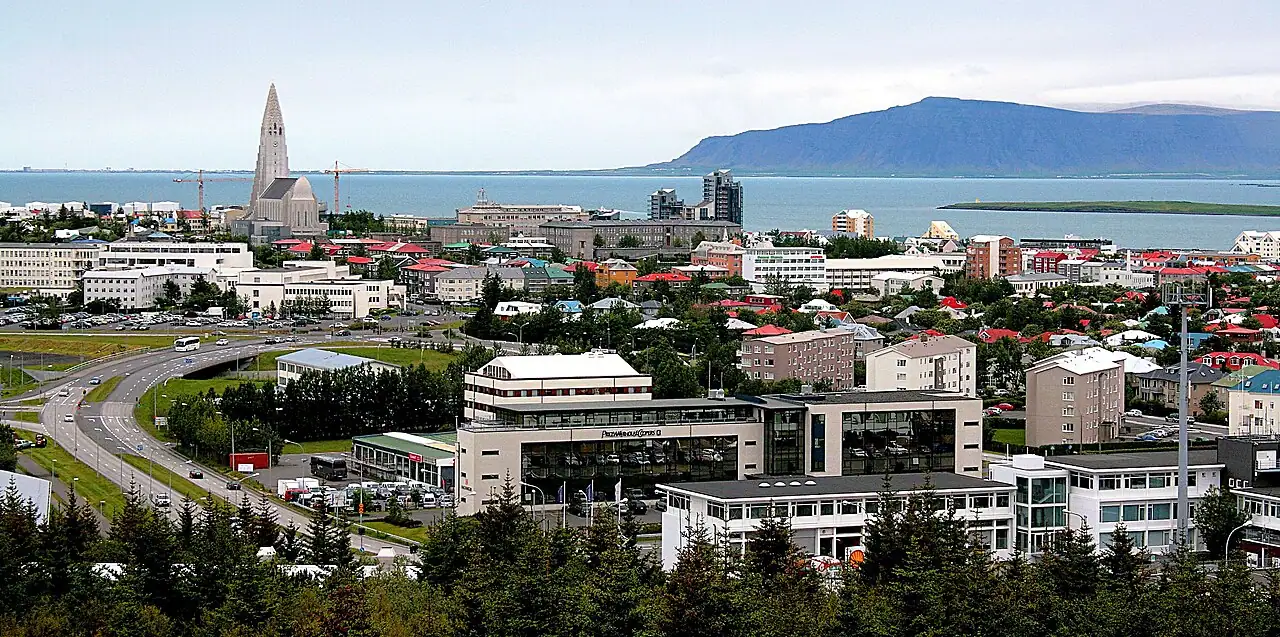
Photo: Hedwig Storch, CC BY-SA 3.0, via Wikimedia Commons
Iceland, Greenland & the Arctic in February: Shoulder season
A few late-winter northern lights cruises from the UK occasionally include Iceland stops, but crossings can be stormy. Reykjavík’s Winter Lights Festival brightens the city early in the month, and the sun returns to Svalbard’s horizon in mid-February after months of polar night.
Across Iceland, Greenland & the Arctic cruise ports, February brings average highs around 28°F (-2°C) and lows near 20°F, with about 3.7 inches of rain over the month and roughly 7 hours of daylight.
- Verdict
- Shoulder season
- Season
- Late May to September; Greenland and Svalbard mainly June to August
- Average high / low
- 28°F / 20°F
- Rainfall (month)
- 3.7 in
- Daylight
- About 7 hours
- Typical cruise length
- 7–10 nights around Iceland; 12–16 nights from Europe; 10–14-night Arctic expeditions
What to pack: proper cold-weather layers: thermal base layers, a warm insulated waterproof jacket, hat, gloves and waterproof footwear.
How February compares with the rest of the year
- Jan: No regular sailings
- Feb: Shoulder season
- Mar: Shoulder season
- Apr: No regular sailings
- May: Shoulder season
- Jun: Best time to go
- Jul: Best time to go
- Aug: Best time to go
- Sep: Good time to go
- Oct: Shoulder season
- Nov: No regular sailings
- Dec: No regular sailings
- No regular sailings
- Shoulder season
- Good time to go
- Best time to go
Iceland, Greenland & the Arctic weather in February
| Month | Jan | Feb | Mar | Apr | May | Jun | Jul | Aug | Sep | Oct | Nov | Dec |
|---|---|---|---|---|---|---|---|---|---|---|---|---|
| High °F (°C) | 28-2 | 28-2 | 29-1 | 352 | 415 | 499 | 5312 | 5211 | 478 | 394 | 341 | 30-1 |
| Low °F (°C) | 21-6 | 20-7 | 21-6 | 27-3 | 341 | 415 | 468 | 457 | 405 | 331 | 28-2 | 24-5 |
| Rain in (mm) | 3.998 | 3.794 | 3.588 | 2.973 | 3.076 | 3.281 | 3.385 | 3.794 | 4.5113 | 4.2107 | 3.896 | 4.1105 |
| Daylight (hrs) | 4 | 7 | 11 | 16 | 20 | 23 | 21 | 18 | 13 | 9 | 5 | 3 |
February weather port by port
| Port | Avg high | Avg low | Rain | Daylight |
|---|---|---|---|---|
| Reykjavík | 36°F | 29°F | 6.3 in | 8 h |
| Akureyri | 31°F | 21°F | 3.9 in | 8 h |
| Ísafjörður | 33°F | 26°F | 5.5 in | 8 h |
| Seyðisfjörður | 35°F | 28°F | 3.8 in | 8 h |
| Tórshavn, Faroe Islands | 43°F | 39°F | 4.5 in | 9 h |
| Ilulissat | 8°F | -2°F | 0.5 in | 7 h |
| Nuuk | 20°F | 13°F | 2.2 in | 8 h |
| Longyearbyen, Svalbard | 17°F | 9°F | 2.1 in | 0 h |
| Tromsø | 26°F | 17°F | 4.3 in | 7 h |
Average daily highs and lows, 2015–2024, from NASA POWER, adjusted to sea level. Rain is the average monthly total.
Other great cruise destinations in February
- Caribbean in February
- Eastern Caribbean in February
- Western Caribbean in February
- Southern Caribbean in February
- Hawaii in February
- Mexican Riviera & Baja in February
- Panama Canal & Central America in February
- South America in February
- Galápagos Islands in February
- Canary Islands & Atlantic Isles in February
See every destination for February, with a port weather map →
Iceland, Greenland & the Arctic in February: FAQs
Is February a good time to cruise Iceland, Greenland & the Arctic?
It can be, as a shoulder-season month. A few late-winter northern lights cruises from the UK occasionally include Iceland stops, but crossings can be stormy. Reykjavík’s Winter Lights Festival brightens the city early in the month, and the sun returns to Svalbard’s horizon in mid-February after months of polar night.
What is the weather like on a Iceland, Greenland & the Arctic cruise in February?
Across Iceland, Greenland & the Arctic cruise ports, February brings average highs around 28°F (-2°C) and lows near 20°F, with about 3.7 inches of rain over the month and roughly 7 hours of daylight. Conditions vary from port to port and day to day.
What should I pack for a Iceland, Greenland & the Arctic cruise in February?
Pack proper cold-weather layers: thermal base layers, a warm insulated waterproof jacket, hat, gloves and waterproof footwear. Check your cruise line's dress code for evenings.
When is the best time to cruise Iceland, Greenland & the Arctic?
Late May to September; Greenland and Svalbard mainly June to August. The best months are usually June, July, August.
Where else can I cruise in February?
February is also a top month for Caribbean, Eastern Caribbean, Western Caribbean, Southern Caribbean, Hawaii.
Updated November 2026 by the BookMyDreamCruise editorial team. How we research and fact-check.
Sources: NASA POWER climate data.