Best time to cruise · No regular sailings
Antarctica cruises in July
July is the depth of the Antarctic winter, with sea ice extending hundreds of miles north and temperatures far below zero °F on the high plateau. No ships visit. If you are planning for the coming summer, it’s a useful month to compare ship sizes, activities such as kayaking or camping, and whether a fly-cruise makes sense.
- No regular sailings
- Avg high 47°F
- 9 hrs daylight
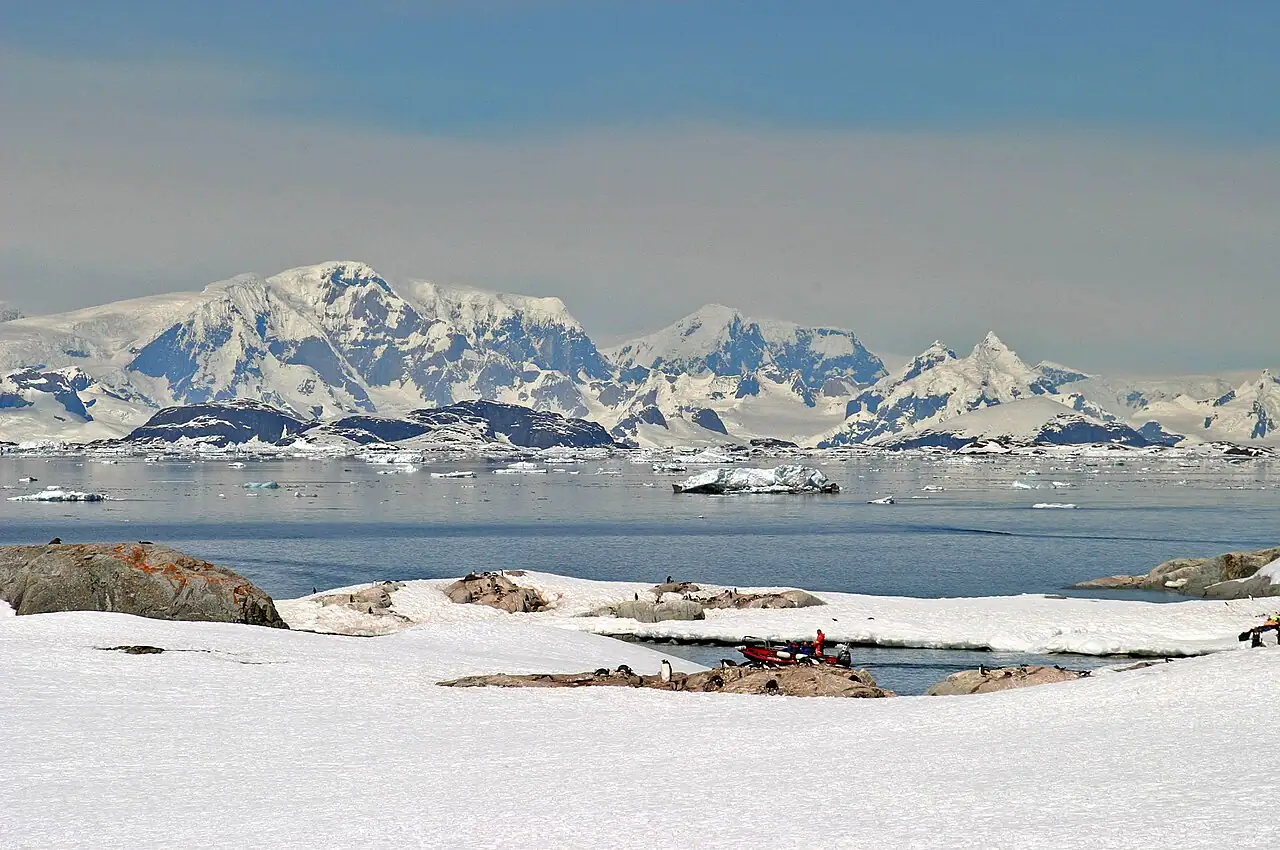
Photo: W. Bulach, CC BY-SA 4.0, via Wikimedia Commons
Antarctica in July: No regular sailings
July is the depth of the Antarctic winter, with sea ice extending hundreds of miles north and temperatures far below zero °F on the high plateau. No ships visit. If you are planning for the coming summer, it’s a useful month to compare ship sizes, activities such as kayaking or camping, and whether a fly-cruise makes sense.
Across Antarctica cruise ports, July brings average highs around 47°F (8°C) and lows near 39°F, with about 1.7 inches of rain over the month and roughly 9 hours of daylight.
- Verdict
- No regular sailings
- Season
- Late October or November to March; penguin chicks December to February, whales peak February to March.
- Average high / low
- 47°F / 39°F
- Rainfall (month)
- 1.7 in
- Daylight
- About 9 hours
- Typical cruise length
- 10 to 12 nights from Ushuaia; 18 to 23 nights with the Falklands and South Georgia
How July compares with the rest of the year
- Jan: Best time to go
- Feb: Best time to go
- Mar: Good time to go
- Apr: No regular sailings
- May: No regular sailings
- Jun: No regular sailings
- Jul: No regular sailings
- Aug: No regular sailings
- Sep: No regular sailings
- Oct: Shoulder season
- Nov: Good time to go
- Dec: Best time to go
- No regular sailings
- Shoulder season
- Good time to go
- Best time to go
Antarctica weather in July
| Month | Jan | Feb | Mar | Apr | May | Jun | Jul | Aug | Sep | Oct | Nov | Dec |
|---|---|---|---|---|---|---|---|---|---|---|---|---|
| High °F (°C) | 6619 | 6619 | 6317 | 5814 | 5211 | 489 | 478 | 499 | 5211 | 5613 | 6116 | 6418 |
| Low °F (°C) | 5412 | 5412 | 5211 | 489 | 457 | 415 | 394 | 415 | 426 | 457 | 4910 | 5211 |
| Rain in (mm) | 1.845 | 1.846 | 2.255 | 2.153 | 2.051 | 1.845 | 1.742 | 1.744 | 1.333 | 1.435 | 1.847 | 1.742 |
| Daylight (hrs) | 15 | 14 | 13 | 11 | 9 | 9 | 9 | 10 | 12 | 14 | 15 | 16 |
July weather port by port
| Port | Avg high | Avg low | Rain | Daylight |
|---|---|---|---|---|
| Ushuaia | 37°F | 30°F | 1.7 in | 8 h |
| Stanley (Falkland Islands) | 40°F | 36°F | 1.6 in | 8 h |
| Punta Arenas | 40°F | 34°F | 1.7 in | 8 h |
| Buenos Aires | 57°F | 48°F | 2.6 in | 10 h |
| Santiago (San Antonio & Valparaíso) | 57°F | 51°F | 1.5 in | 10 h |
| Puerto Madryn | 52°F | 37°F | 0.9 in | 9 h |
Average daily highs and lows, 2015–2024, from NASA POWER, adjusted to sea level. Rain is the average monthly total.
Other great cruise destinations in July
Antarctica in July: FAQs
Is July a good time to cruise Antarctica?
Generally not: there are few or no regular sailings. July is the depth of the Antarctic winter, with sea ice extending hundreds of miles north and temperatures far below zero °F on the high plateau. No ships visit. If you are planning for the coming summer, it’s a useful month to compare ship sizes, activities such as kayaking or camping, and whether a fly-cruise makes sense.
What is the weather like on a Antarctica cruise in July?
Across Antarctica cruise ports, July brings average highs around 47°F (8°C) and lows near 39°F, with about 1.7 inches of rain over the month and roughly 9 hours of daylight. Conditions vary from port to port and day to day.
When is the best time to cruise Antarctica?
Late October or November to March; penguin chicks December to February, whales peak February to March.. The best months are usually January, February, December.
Where else can I cruise in July?
July is also a top month for Bermuda, Alaska, Canada & New England, Northern Europe, Norwegian Fjords.
Updated November 2026 by the BookMyDreamCruise editorial team. How we research and fact-check.
Sources: NASA POWER climate data.