Best time to cruise · Good time to go
Antarctica cruises in November
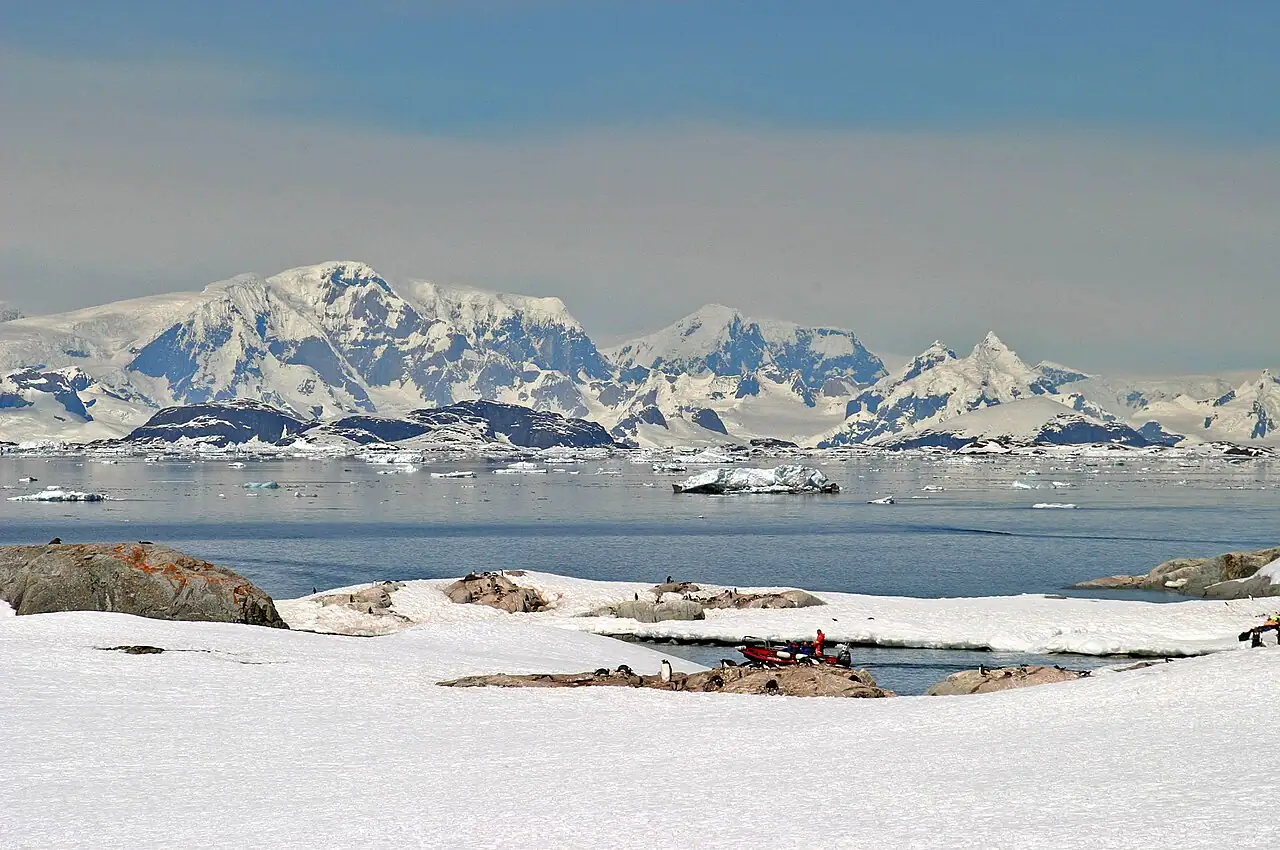
November opens the main Peninsula season with pristine snow, towering icebergs and penguins courting and stealing pebbles to build nests. Heavy sea ice can block some landing sites and channels early in the month. Fares are lower than in midsummer, and on South Georgia fur seals crowd the beaches to breed, sometimes limiting landings.
- Good time to go
- Avg high 61°F
- 15 hrs daylight
Photo: W. Bulach, CC BY-SA 4.0, via Wikimedia Commons
Antarctica in November: Good time to go
November opens the main Peninsula season with pristine snow, towering icebergs and penguins courting and stealing pebbles to build nests. Heavy sea ice can block some landing sites and channels early in the month. Fares are lower than in midsummer, and on South Georgia fur seals crowd the beaches to breed, sometimes limiting landings.
Across Antarctica cruise ports, November brings average highs around 61°F (16°C) and lows near 49°F, with about 1.8 inches of rain over the month and roughly 15 hours of daylight.
- Verdict
- Good time to go
- Season
- Late October or November to March; penguin chicks December to February, whales peak February to March.
- Average high / low
- 61°F / 49°F
- Rainfall (month)
- 1.8 in
- Daylight
- About 15 hours
- Typical cruise length
- 10 to 12 nights from Ushuaia; 18 to 23 nights with the Falklands and South Georgia
What to pack: layers you can add and remove: long pants, a warm fleece or sweater, a waterproof jacket and closed walking shoes.
How November compares with the rest of the year
- Jan: Best time to go
- Feb: Best time to go
- Mar: Good time to go
- Apr: No regular sailings
- May: No regular sailings
- Jun: No regular sailings
- Jul: No regular sailings
- Aug: No regular sailings
- Sep: No regular sailings
- Oct: Shoulder season
- Nov: Good time to go
- Dec: Best time to go
- No regular sailings
- Shoulder season
- Good time to go
- Best time to go
Antarctica weather in November
| Month | Jan | Feb | Mar | Apr | May | Jun | Jul | Aug | Sep | Oct | Nov | Dec |
|---|---|---|---|---|---|---|---|---|---|---|---|---|
| High °F (°C) | 6619 | 6619 | 6317 | 5814 | 5211 | 489 | 478 | 499 | 5211 | 5613 | 6116 | 6418 |
| Low °F (°C) | 5412 | 5412 | 5211 | 489 | 457 | 415 | 394 | 415 | 426 | 457 | 4910 | 5211 |
| Rain in (mm) | 1.845 | 1.846 | 2.255 | 2.153 | 2.051 | 1.845 | 1.742 | 1.744 | 1.333 | 1.435 | 1.847 | 1.742 |
| Daylight (hrs) | 15 | 14 | 13 | 11 | 9 | 9 | 9 | 10 | 12 | 14 | 15 | 16 |
November weather port by port
| Port | Avg high | Avg low | Rain | Daylight |
|---|---|---|---|---|
| Ushuaia | 51°F | 39°F | 3.2 in | 16 h |
| Stanley (Falkland Islands) | 51°F | 42°F | 1.4 in | 16 h |
| Punta Arenas | 52°F | 42°F | 1.7 in | 16 h |
| Buenos Aires | 76°F | 64°F | 3.4 in | 14 h |
| Santiago (San Antonio & Valparaíso) | 62°F | 55°F | 0.2 in | 14 h |
| Puerto Madryn | 74°F | 53°F | 1.2 in | 15 h |
Average daily highs and lows, 2015–2024, from NASA POWER, adjusted to sea level. Rain is the average monthly total.
Other great cruise destinations in November
- Mexican Riviera & Baja in November
- Galápagos Islands in November
- Canary Islands & Atlantic Isles in November
- Japan in November
- Australia & New Zealand in November
- Africa & the Indian Ocean in November
- Transatlantic in November
- Nile River in November
- Mekong River in November
See every destination for November, with a port weather map →
Antarctica in November: FAQs
Is November a good time to cruise Antarctica?
Yes, it's a good month. November opens the main Peninsula season with pristine snow, towering icebergs and penguins courting and stealing pebbles to build nests. Heavy sea ice can block some landing sites and channels early in the month. Fares are lower than in midsummer, and on South Georgia fur seals crowd the beaches to breed, sometimes limiting landings.
What is the weather like on a Antarctica cruise in November?
Across Antarctica cruise ports, November brings average highs around 61°F (16°C) and lows near 49°F, with about 1.8 inches of rain over the month and roughly 15 hours of daylight. Conditions vary from port to port and day to day.
What should I pack for a Antarctica cruise in November?
Pack layers you can add and remove: long pants, a warm fleece or sweater, a waterproof jacket and closed walking shoes. Check your cruise line's dress code for evenings.
When is the best time to cruise Antarctica?
Late October or November to March; penguin chicks December to February, whales peak February to March.. The best months are usually January, February, December.
Where else can I cruise in November?
November is also a top month for Mexican Riviera & Baja, Galápagos Islands, Canary Islands & Atlantic Isles, Japan, Australia & New Zealand.
Updated November 2026 by the BookMyDreamCruise editorial team. How we research and fact-check.
Sources: NASA POWER climate data.